Market Overview
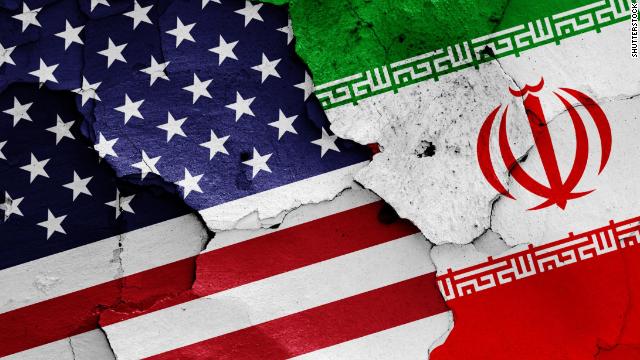
Prediction markets are currently assessing the likelihood of a US-Iran nuclear agreement by December 31, 2026, at 53.5%—essentially a coin flip. This narrow majority probability, derived from $861,792 in trading volume, indicates substantial market uncertainty about whether either side will pursue or successfully negotiate a deal within the next 16 months. The flat 24-hour price action suggests the market has largely settled at an equilibrium reflecting current geopolitical conditions rather than responding to breaking developments.
Why It Matters
A nuclear agreement between the US and Iran would represent one of the most significant diplomatic achievements in recent Middle Eastern affairs. Iran's nuclear program remains a flashpoint for regional security concerns and international sanctions regimes. The previous Joint Comprehensive Plan of Action (JCPOA), signed in 2015, temporarily limited Iranian nuclear activities in exchange for sanctions relief—but the US withdrew in 2018, after which Iran resumed enrichment activities. Any new accord would need to address the current state of Iran's nuclear advancement, which has progressed substantially beyond 2015 levels, making negotiating terms considerably more complex. Such an agreement would also have implications for broader US foreign policy, Middle Eastern stability, and global non-proliferation frameworks.
Key Factors
Several structural factors support the current even-odds assessment. The US political calendar is a primary driver: the Trump administration's second term, beginning January 2025, has historically taken a harder line on Iran compared to the Biden approach. However, the administration's stated openness to deals on favorable terms creates a narrow diplomatic window if Iran signals serious negotiating intent. Iran's domestic political situation is also relevant—Tehran faces internal pressures from both hardline factions opposing any deal and pragmatists favoring sanctions relief. The technical dimension compounds complexity: Iran's nuclear stockpile and enrichment levels have grown, meaning any agreement must address more advanced infrastructure than the JCPOA did. Additionally, the market's 53.5% probability reflects that official announcements qualify for resolution, meaning even preliminary frameworks that lack full implementation could trigger a \"Yes\" outcome if publicly announced.
Outlook
The narrow probability margin suggests traders see roughly equivalent likelihoods for and against a deal. Several scenarios could shift the market significantly: a major shift in US diplomatic posture toward negotiation, formal Iranian proposals signaling willingness to negotiate, or conversely, escalating sanctions or military tensions that foreclose diplomatic channels. The 16-month window is sufficiently long for sustained negotiation efforts if both sides commit, but sufficiently short that any extended impasses could make announcement by year-end unlikely. Market participants appear to be calibrating to genuine uncertainty rather than betting heavily on either outcome, reflecting the genuine complexity of reconciling US security demands with Iranian sovereignty concerns and the technical challenges posed by Iran's advanced nuclear progress.