Market Overview
The prediction market for US military forces entering Iran has priced in a 99.3% probability that this scenario will not occur by year-end 2024, with the complementary 0.7% probability reflecting only tail-risk scenarios. This represents an exceptionally high confidence level in the status quo, with the market having remained stable over the past 24 hours despite significant trading volume of $17.9 million. The specificity of the resolution criteria—requiring active military personnel (excluding intelligence operatives, contractors, and diplomats) to physically enter Iranian terrestrial territory—provides a narrow but well-defined outcome threshold.
Why It Matters
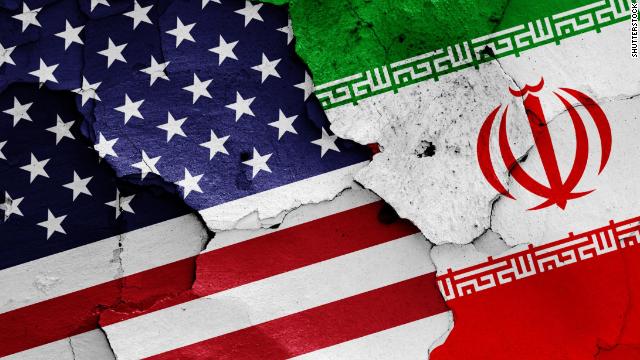
A US military incursion into Iran would represent a dramatic escalation in Middle Eastern tensions and potentially constitute a major geopolitical event with far-reaching consequences. Such an action would likely involve either direct military conflict, a covert special operations mission of extraordinary magnitude, or a response to a significant Iranian provocation. The market's overwhelming confidence in the \"No\" outcome reflects the assessment that despite existing US-Iran hostilities—including cyber operations, proxy conflicts, and periodic military posturing—the probability of direct ground force entry remains vanishingly small. Even as the US maintains military presence across the region, including in Iraq, the Gulf, and nearby waters, a cross-border ground operation into Iran proper remains a low-probability event.
Key Factors
Several structural factors underpin the market's extreme confidence. The US historically avoids large-scale ground invasion operations, particularly given post-2003 Iraq War experiences. International law and diplomatic consequences would be severe. Iran possesses substantial military capabilities that would impose significant costs on any invasion force. Additionally, with only weeks remaining in 2024, the timeframe for such an operation is compressed—military operations of this magnitude typically require extended planning and buildup. Current regional dynamics, while tense, have not crossed the threshold into active large-scale US-Iranian warfare. The market's pricing leaves room only for genuinely catastrophic scenarios: a major Iranian attack on US forces that triggers an immediate retaliatory incursion, or an unexpected special operations deployment occurring within the compressed timeframe.
Outlook
For the probability to shift materially toward the \"Yes\" outcome, a significant triggering event would be required—most plausibly, a major Iranian military strike on US personnel or facilities in the region that prompts an immediate boots-on-ground response. Without such a catalyst, the market's current assessment appears stable. As December progresses and the year-end deadline approaches, the window for such an escalation only narrows further, likely reinforcing the market's extreme confidence in the no-entry scenario. Traders should monitor developments such as escalated Iranian military exercises, attacks on US assets, or significant diplomatic breakdowns, as these could represent the only pathways to shifting probabilities materially.