Market Overview
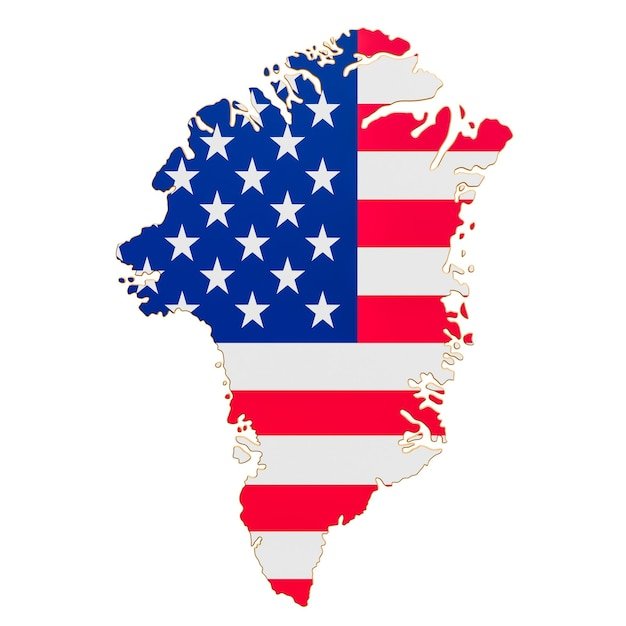
Prediction markets are currently assigning a 14% probability to U.S. acquisition of Greenlandic territory within the next two years, with trading volume reaching nearly $10 million despite minimal price movement over recent days. The flat probability trajectory suggests the market has settled into a holding pattern, pricing in baseline geopolitical risk without reaction to specific developments. At this level, traders are implicitly valuing the scenario as unlikely but far from negligible—roughly 1-in-7 odds.
Why It Matters
Greenland's strategic value has undergone a dramatic reassessment in recent years. Its Arctic location, vast mineral deposits, and sparse population have made it an object of renewed strategic interest from multiple powers. The explicit framing of acquisition in U.S. policy discourse—rather than remaining purely theoretical—has shifted the conversation from impossible to merely improbable in markets. The resolution criteria are deliberately stringent, requiring binding legal instruments transferring sovereignty or establishing exclusive U.S. jurisdiction; casual statements, lease agreements, or basing rights would not qualify. This high bar is crucial context: 14% reflects not expectations of imminent annexation, but rather a small but real probability that circumstances could produce an outcome previously considered outside the realm of practical politics.
Key Factors
The probability appears supported by several structural considerations. First, Greenland's relationship with Denmark is asymmetrical and evolving; while Danish sovereignty is internationally recognized, Greenland has pursued greater autonomy and independence aspirations. Second, the current U.S. administration has publicly expressed interest in the island, elevating it from fringe discussion to headline material. Third, financial incentives exist on both sides: the U.S. perceives strategic advantage, while Greenland and Denmark might consider substantial compensation. However, powerful countervailing factors constrain the scenario: Denmark is a NATO ally unlikely to voluntarily cede territory; Greenlandic public opinion would likely oppose U.S. control; and international law and norms strongly disfavor unilateral territorial acquisition. The 14% probability should be interpreted as pricing these competing considerations, with modest weight assigned to scenarios involving either dramatic political shifts in Copenhagen or Nuuk, or extreme circumstances (war, state collapse) that might alter incentive structures fundamentally.
Outlook
The market will likely remain volatile but anchored near current levels absent major developments. Qualifying moves would require a binding agreement—legislation, treaty text, or executive action—not merely negotiating statements. Short-term catalysts could include formal U.S. acquisition proposals, Greenlandic independence movements that reshape negotiating positions, or significant Arctic geopolitical escalation. Conversely, explicit official statements from Denmark or Greenland rejecting such arrangements could compress the probability downward. The 24-month timeframe is sufficient for political conditions to shift materially, but the resolution bar remains extraordinarily high: a lease, basing agreement, or commercial concession would not trigger resolution. Markets are effectively pricing that while Greenland acquisition has moved into political discourse, the formal institutional steps required for resolution remain distant.