Market Overview
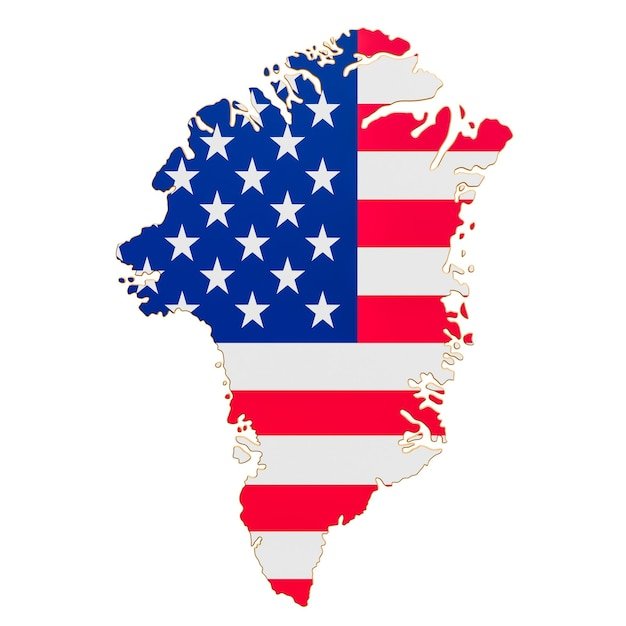
Prediction markets have settled on a 6.5% probability that the United States will launch a military offensive to establish control over Greenlandic territory by December 31, 2026. With nearly $1.35 million in trading volume, the market reflects serious engagement from traders on a scenario that remains broadly characterized as unlikely but non-negligible. The probability has remained stable at this level over the past 24 hours, suggesting the market has incorporated available information and reached an equilibrium valuation.
Why It Matters
Greenland's strategic position in the Arctic—controlling critical shipping routes and sitting atop significant mineral and energy resources—has elevated its geopolitical importance amid U.S.-China competition and NATO considerations. The notion of U.S. territorial acquisition has moved from theoretical speculation to concrete public discussion, making formal probability assessment relevant for policymakers, investors, and strategists monitoring geopolitical risk. A successful invasion would represent an unprecedented shift in international law and U.S. foreign policy, with cascading implications for NATO cohesion, Danish sovereignty, and Arctic governance.
Key Factors
Multiple elements are driving the modest but material 6.5% probability. First, senior U.S. officials have publicly discussed acquiring Greenland, lending credibility to what might otherwise be dismissed as fringe rhetoric. Second, the timeframe—just 24 months—compresses the window for escalation, limiting the scenarios under which military action becomes politically and logistically feasible. Third, Denmark's NATO membership and the absence of any military threat from Greenland itself create substantial diplomatic and legal barriers to unilateral U.S. action. Fourth, the logistics of a successful invasion against a NATO-allied territory would be extraordinarily complex and costly, militarily and diplomatically. Finally, domestic political constraints in the U.S., allied opposition, and international law considerations make sustained military occupation politically untenable for most scenarios traders might envision.
Outlook
The 6.5% probability reflects a market that treats military invasion as a tail risk—possible under extreme circumstances but requiring significant policy reversal or crisis conditions. Key developments that could shift probabilities include escalating Arctic tensions, changes in U.S. administration priorities, or unforeseen security crises that alter cost-benefit calculations. Conversely, any clarification that acquisition discussions remain diplomatic rather than military in nature would likely compress odds further. Traders should monitor both public rhetoric from U.S. officials and Denmark's strategic positioning; absent dramatic changes in either, the probability is likely to remain in the single-digit range through 2026.