Market Overview
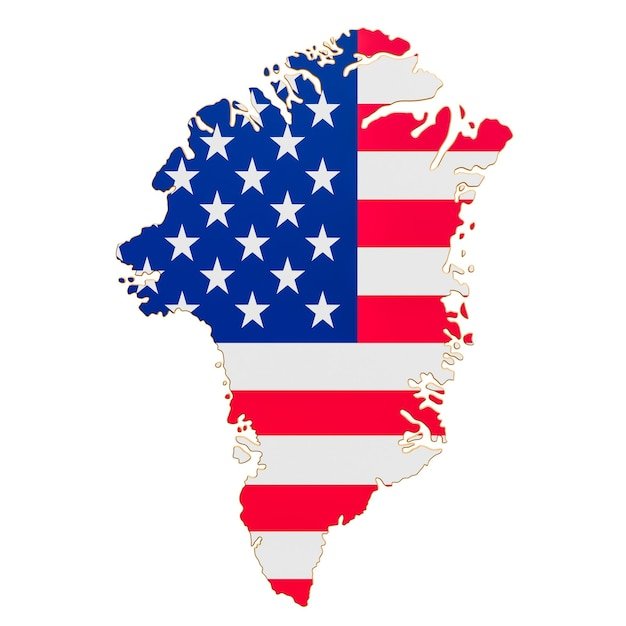
A prediction market tracking the possibility of a U.S. military invasion of Greenland in 2026 is pricing the scenario at 6.5% probability, with volume exceeding $1.3 million. The stable odds over the past 24 hours suggest traders have reached a consensus valuation that treats the prospect as improbable but non-negligible—roughly equivalent to the odds of rolling a specific number twice on a standard die.
Why It Matters
The market reflects broader concerns about U.S. strategic interest in Greenland, an autonomous Danish territory with significant Arctic geopolitical importance. Greenland's vast mineral deposits, Arctic shipping routes, and proximity to Russia and China have made it a recurring topic in defense and foreign policy discussions. While military invasion represents an extreme interpretation of potential U.S. actions, the market provides a barometer for how traders assess escalation risk in a region of acknowledged strategic competition.
Key Factors
Several variables are likely sustaining the 6.5% assessment rather than pushing odds lower. First, the five-year window to end of 2026 provides sufficient time for geopolitical shocks or policy reversals that traders cannot entirely discount. Second, statements by U.S. political figures expressing interest in Greenland's acquisition have been ambiguous about methods, leaving some model of forceful takeover within the realm of possibility for risk-conscious traders. Third, the resolution criteria specify military offensive action, a threshold that, while unlikely, remains more plausible in tail-risk scenarios involving Arctic conflict escalation or NATO breakdown than complete dismissal would suggest. Conversely, Denmark's NATO membership, international law, and the absence of any credible U.S. government preparation for invasion are anchoring odds in the low single digits.
Outlook
Market movement would likely require significant triggering events to shift these odds materially. A major Arctic military incident, a U.S. policy shift toward overt territorial acquisition rhetoric, or geopolitical deterioration involving NATO could drive probability upward. Conversely, explicit U.S. statements ruling out military action or successful diplomatic frameworks for Arctic cooperation could compress odds further. For now, the stable 6.5% reflects trader consensus that invasion remains a low-probability tail risk rather than a plausible near-term scenario.