MARKET OVERVIEW
Prediction markets currently assign a 26.5% probability to a U.S. military invasion of Cuba within the next 12 months, with significant volume of $1.53 million indicating sustained trader interest in the question. The probability has remained stable over the past 24 hours, suggesting the market has reached an equilibrium around current geopolitical conditions rather than reacting to breaking news. This odds level implies traders view an invasion as an unlikely but non-trivial possibility—roughly equivalent to the probability of rolling a four or higher on a single die.
WHY IT MATTERS
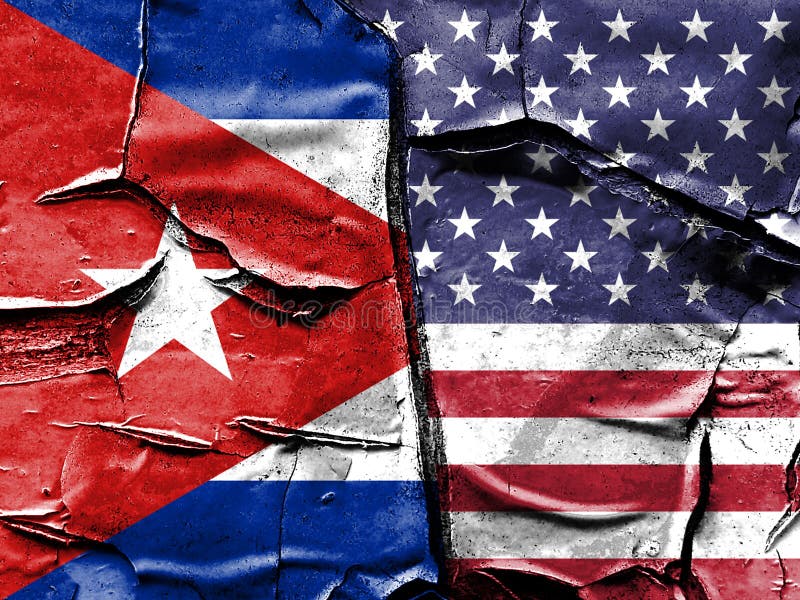
A U.S. invasion of Cuba would represent one of the most significant geopolitical events in decades, marking a dramatic escalation from current policy frameworks and potentially destabilizing hemispheric relations. The resolution criteria specify military action intended to establish control over any portion of Cuban territory, setting a relatively high bar that encompasses not merely humanitarian intervention, strikes against specific targets, or support for insurgents, but rather full-scale offensive operations. The market's 26.5% assessment suggests traders perceive material risk despite the absence of concrete military preparations or official policy shifts toward invasion.
KEY FACTORS
Several structural factors appear to be driving the current probability assessment. U.S.-Cuba relations have deteriorated in recent years, with ongoing disputes over migration, Guantanamo Bay detention operations, alleged sonic attacks on diplomats, and Cuba's alignment with adversarial powers including Russia and China. However, these frictions have not translated into bipartisan domestic political support for military intervention—a prerequisite for such an operation. The 2024 U.S. presidential transition introduces uncertainty about hemispheric policy direction, though even hawkish foreign policy camps have not prioritized Cuba invasion planning in public statements. International legal frameworks, NATO alliance considerations, and the military resources required to sustain an invasion of a well-armed Caribbean nation all constrain feasibility.
The 26.5% reading likely reflects tail-risk hedging by traders rather than confident expectations. Investors holding this prediction may be pricing in low-probability scenarios such as a major terror attack originating from Cuba, a humanitarian crisis triggering intervention, or a significant shift in U.S. strategic priorities toward containing Cuban influence in the region. The market may also be anchored to the historical precedent of the 1961 Bay of Pigs invasion, which demonstrates that invasion planning, once contemplated at the highest levels, can advance further than general observers expect.
OUTLOOK
The stability of the probability over the short term suggests the market lacks catalyst-driven momentum in either direction. Developments that could shift odds upward would include a dramatic deterioration in U.S.-Cuba relations, a change in U.S. administration with more aggressive Cuba policy, evidence of direct Cuban involvement in attacks on U.S. personnel or interests, or a succession crisis in Havana creating power vacuum conditions. Conversely, any diplomatic rapprochement, formal commitment to non-intervention frameworks, or shift in broader U.S. foreign policy priorities could lower the probability. Traders should monitor both official U.S. policy statements and the broader geopolitical environment for signals that could tip the market's assessment of this low-probability, high-impact scenario.