Market Overview
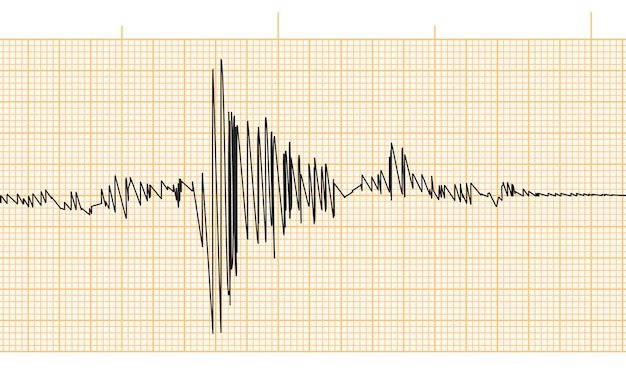
A prediction market is currently pricing 8-or-more magnitude-7.0 earthquakes in the next seven months at 85.5% probability, with steady positioning and $528,320 in trading volume. The market tracks seismic activity globally using USGS data as its resolution source, covering the period from December 4, 2025, through June 30, 2026. The stable probability over the past 24 hours suggests market participants have converged on a relatively consistent view of earthquake frequency during this timeframe.
Why It Matters
Large earthquakes pose significant humanitarian and economic risks, affecting infrastructure, property, and lives across vulnerable regions. While earthquake prediction remains scientifically impossible, historical frequency data provides a basis for assessing whether a given threshold of major seismic events is likely or unlikely. This market effectively operationalizes historical baseline expectations, allowing traders to express views on whether seismic activity will align with, exceed, or fall below typical patterns. The high implied probability suggests participants view eight magnitude-7.0+ events in seven months as a probable outcome.
Key Factors
The baseline expectation of approximately 15 magnitude-7.0+ earthquakes per year globally—according to USGS historical records—translates to roughly 8-9 events in a seven-month period under average conditions. This statistical foundation likely anchors the market's 85.5% probability, as it represents near-baseline activity rather than an extreme scenario. Importantly, earthquake frequency is random and cannot be predicted; the market price reflects probabilistic interpretation of historical data rather than any forecasting capability. Regional factors like plate tectonics, recent seismic cycles, and the inherent variability of earthquake distribution across the globe introduce uncertainty, but traders appear to be discounting the likelihood of a major shortfall below historical norms during this specific window.
Outlook
The market's conviction at 85.5% implies that a scenario with fewer than eight major earthquakes is priced as a roughly 14.5% tail risk. Resolution depends entirely on USGS cataloging, with a buffer extended to July 7, 2026, if significant earthquakes require additional time to be recorded. Given the immutable nature of seismic activity and the market's alignment with historical frequency, the trajectory will be driven by actual earthquake occurrence in coming months. Traders should note that earthquake sequences and clustering can create periods of elevated activity, but no mechanism exists to predict such events in advance.