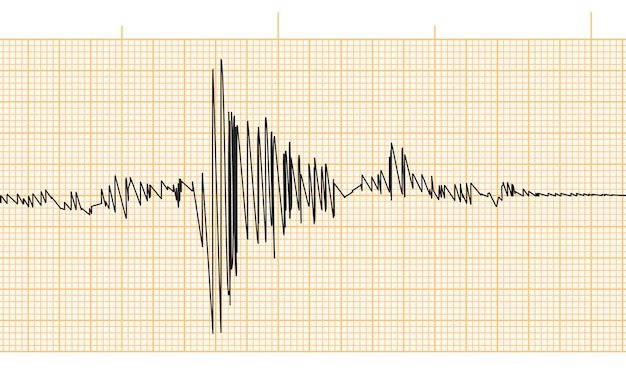
Market Overview
Prediction market participants are pricing a 5% probability that Earth will experience at least one earthquake of magnitude 10.0 or greater between December 8, 2025, and December 31, 2026. The market, which has accumulated $589,842 in trading volume, remains stable with no movement from its 5% probability level over the past 24 hours. Resolution will be determined by the United States Geological Survey (USGS) Earthquake Hazards Program, with a grace period extending through January 31, 2027, to account for any magnitude revisions or reporting delays.
Why It Matters
A magnitude 10.0 earthquake would represent a seismic event of catastrophic, planet-altering proportions. No earthquake of this magnitude has ever been recorded instrumentally in human history. The largest recorded earthquake—the 1960 Great Chilean Earthquake—reached magnitude 9.5. The energy release from a magnitude 10.0 event would be roughly 32 times greater than the Chilean earthquake, making it a once-in-geological-ages occurrence. Understanding how prediction markets price such extreme-tail risks offers insight into how traders balance scientific knowledge against genuine uncertainty in natural hazard forecasting.
Key Factors
The 5% probability reflects the convergence of multiple considerations. Seismologically, the probability of a magnitude 10.0 event in any given year is extraordinarily low based on the historical frequency distribution of earthquakes. Subduction zones—the primary sources of the largest earthquakes—show no current elevated activity suggestive of an imminent megaquake of historic proportions. The 2004 Indian Ocean earthquake (magnitude 9.1) and the 2011 Tohoku-Oki earthquake (magnitude 9.0) represent the upper range of plausible events in recent decades. However, prediction markets incorporate a small non-zero probability to account for the possibility of unknown geological conditions and the inherent limitations in earthquake forecasting science. The one-year timeframe of this market further constrains the odds, as longer-term geological timescales typically govern the recurrence intervals of the largest seismic events.
Outlook
Unless seismic monitoring networks detect unusual activity in major subduction zones—such as accelerated plate movement or increased foreshock activity in regions like the Cascadia Subduction Zone, the Kuril-Kamchatka region, or the Aleutian Trench—the market probability is likely to remain anchored near current levels. Any significant magnitude 9.5+ earthquake would likely trigger market repricing, though even that would not guarantee a subsequent 10.0+ event. The market's stability and low probability reflect a scientific consensus that while large earthquakes remain inevitable over geological timescales, a magnitude 10.0 event within a single calendar year remains an exceptionally low-probability scenario.