Market Overview
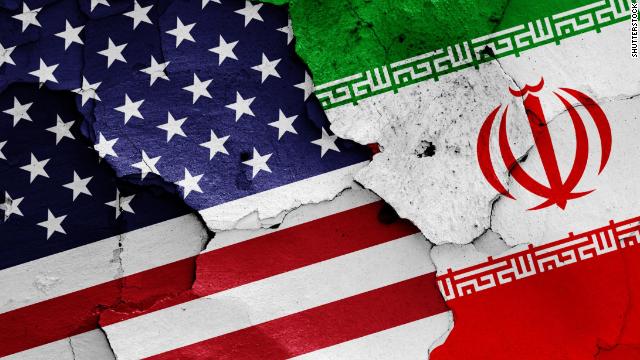
With $17.9 million in trading volume, the prediction market on US military entry into Iran shows overwhelming consensus, pricing the likelihood of such an incursion at 99.3% against. The stability of this probability—unchanged from 24 hours ago—indicates the market has largely settled on an equilibrium reflecting current baseline conditions. The high volume suggests significant financial backing behind both sides of the trade, though the dramatic skew toward the \"No\" outcome demonstrates broad confidence in the status quo holding through year-end.
Why It Matters
US military personnel physically entering Iranian territory would represent a dramatic escalation in Middle Eastern tensions and mark a consequential shift in bilateral relations. The market's assessment carries implications for investors, policymakers, and military analysts monitoring Iran-US dynamics. The near-certainty priced into this market reflects assessments by sophisticated traders about the thresholds required to trigger such a crossing—a bar that appears prohibitively high given current diplomatic and military postures.
Key Factors
Several structural elements underpin the market's extreme confidence in the \"No\" outcome. First, the resolution criteria are deliberately narrow: only active military personnel entering Iranian terrestrial territory count, explicitly excluding contractors, advisors, diplomatic entourages, and operations in maritime or aerial space. This specificity raises the bar significantly beyond general \"military conflict\" scenarios. Second, despite persistent regional proxy conflicts and periodic escalatory rhetoric, direct US ground force entry into Iran has not occurred even during periods of heightened tension, suggesting institutional resistance to this boundary crossing. Third, the timeframe—less than two months from typical market observation—provides limited runway for geopolitical shifts, making baseline inertia a powerful force.
Outlook
For the probability to shift meaningfully from 99.3%, developments would need to be extraordinary: a major direct attack on US assets traceable to Iranian command structures, a collapse of diplomatic channels, or an unexpected regional conflict drawing in US ground forces at scale. Short of such shock events, the market appears anchored to the assessment that neither US nor Iranian military leadership intends to cross this particular threshold in the immediate term. Traders should monitor developments in Israel-Iran tensions, Gulf maritime incidents, and any surprise diplomatic changes as potential catalysts, though the betting market suggests such catalysts remain tail-risk scenarios through year-end.