Market Overview
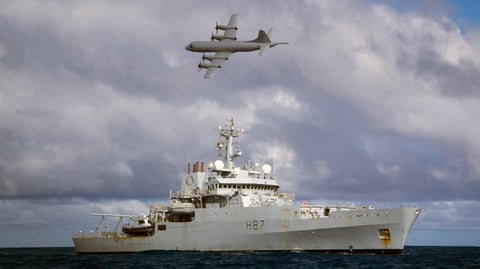
The prediction market on underwater wreckage discovery from MH370 is pricing the event at 1.7% probability through June 30, 2026, with stable pricing over the past 24 hours and $115,000 in trading volume. This near-negligible odds assignment reflects the market's assessment that locating previously undiscovered submerged debris from the aircraft within the next 18 months is an exceptionally remote occurrence. The specificity of the market criteria—requiring new underwater findings rather than washed-ashore wreckage—narrows the resolution pathway further.
Why It Matters
Malaysia Airlines Flight 370 disappeared on March 8, 2014, with 239 people aboard, becoming one of aviation's most enduring mysteries. The aircraft is presumed to have crashed in the southern Indian Ocean, though the precise location remains unknown. Several pieces of debris have washed ashore on African coastlines in the years following the disappearance, providing some geographic clues but little clarity on the main wreckage site. The discovery of the fuselage or substantial underwater debris would potentially provide definitive answers about the aircraft's final moments and trajectory. However, the massive search efforts already undertaken and the absence of confirmed underwater finds have shaped market expectations of additional discoveries.
Key Factors
Multiple factors contribute to the minimal probability assessment. First, the primary underwater search—conducted between 2014 and 2017 in the southern Indian Ocean at considerable expense—covered approximately 120,000 square kilometers and yielded no confirmed discoveries of submerged wreckage. Second, the aircraft's vast potential drift pattern and extreme depth of the search area present significant logistical challenges. Third, systematic search initiatives have largely concluded, and no major new underwater expeditions are currently scheduled for the forecast period. Fourth, the more than 11-year gap since disappearance means that if the wreckage remains on the seafloor, it has undergone substantial deterioration, potentially making detection more difficult. Finally, the market's narrow definition requiring \"new\" wreckage and definitive identification of MH370 origin sets a high evidentiary bar.
Outlook
Should the probability shift meaningfully upward, it would likely require announcement of a newly funded, geographically targeted underwater search expedition with credible scientific backing and modern detection capabilities. Any credible sonar imagery, debris field discovery, or acoustic signals suggesting aircraft wreckage in a previously unsearched area could theoretically increase odds. However, absent such developments, the market's current pricing reflects a consensus view that closure through underwater wreckage discovery within this timeframe remains statistically improbable given resource constraints, search history, and the passage of time. Market participants appear aligned with this conservative assessment, as pricing has remained stable despite the substantial trading volume, suggesting consensus rather than dispute over fair value.