Market Overview
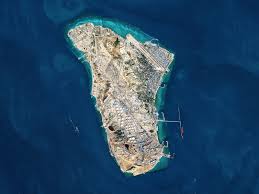
Prediction market traders are pricing a one-in-ten chance that Iran will lose governmental or military control of Kharg Island by mid-April 2026. The probability has climbed 4 percentage points in the past 24 hours on $2.4 million in cumulative trading volume, indicating heightened market attention to the strategically important Persian Gulf location. The island, home to Iran's largest offshore oil terminal and critical energy infrastructure, has remained under continuous Iranian control since its discovery as an oil field in the 1960s.
Why It Matters
Kharg Island represents one of Iran's most economically consequential assets, accounting for a substantial portion of the country's crude oil export capacity. Control of the island would represent a fundamental shift in regional military balance and would likely indicate either a major escalation in direct conflict or a dramatic reversal of Iranian state authority. The resolution criteria explicitly require actual control to be established—not merely threatened, temporarily disrupted, or subject to conflict—making the threshold for a \"Yes\" outcome exceptionally high and suggesting traders view outright loss of control as a tail-risk scenario.
Key Factors
The recent price movement reflects broader anxieties about Middle East tensions rather than imminent specific threats. Traders appear to be pricing in the compounding risk of sustained conflict over a 17-month window, where cumulative escalation could theoretically culminate in a major power attempting seizure of the island. The market's low absolute probability—even at 10.5%—reflects the extraordinary difficulty of establishing such control against a nuclear-threshold power defending a critical national asset. Any resolution would require not temporary bombardment or naval presence, but permanent operational control by a foreign state or occupying force, a distinction that keeps baseline probabilities depressed.
Outlook
The market will likely remain volatile and sensitive to Middle East developments, though sustained probabilities above 20% would suggest trader consensus on imminent major conflict. Key developments that could shift the probability include direct military engagement in the Persian Gulf, attacks on Iranian energy infrastructure, statements from major regional or global powers regarding potential intervention, or significant changes in regional proxy conflicts. Conversely, diplomatic initiatives or de-escalation signals would likely compress the probability downward. The current level suggests markets view the scenario as possible within the timeframe but far from probable—consistent with treating it as a geopolitical risk premium rather than an expected outcome.