Market Overview
Prediction markets currently price the probability of Iran's Islamic Republic ceasing to govern by mid-2026 at 6.5%, with the odds holding steady over recent sessions despite $35.5 million in volume. The stable probability suggests market participants view the near-term collapse scenario as a low-probability event, though not negligible. The resolution criteria are deliberately stringent: routine political transitions, internal power shifts that preserve core institutions, or partial territorial losses do not qualify. Only a fundamental break in continuity—such as a new governing system replacing the Islamic Republic, a provisional government, or loss of administrative control over the majority of the population—would trigger a \"Yes\" resolution.
Why It Matters
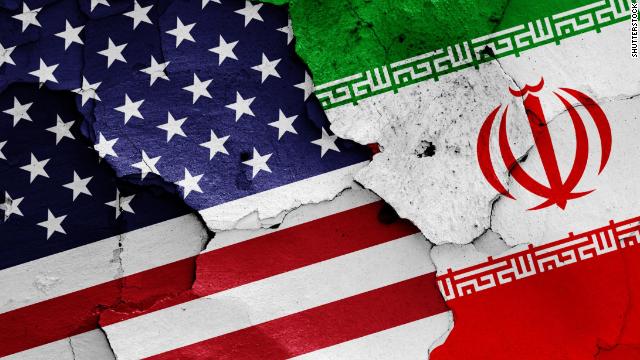
The Iranian regime represents one of the world's most durable authoritarian systems, having survived four decades of international sanctions, two regional wars, economic crises, and periodic civil unrest. The question of regime stability carries global implications for Middle Eastern geopolitics, energy markets, and regional security architectures. A regime collapse would rank among the most significant geopolitical events of this decade, potentially altering alignments across the Gulf and affecting international relations with the United States, Israel, Saudi Arabia, and others. Understanding how prediction markets assess this tail risk provides insight into expert-aggregated judgments about Iran's institutional resilience and the probability of destabilizing shocks.
Key Factors Driving the 6.5% Probability
Several structural factors support the current low odds. The Islamic Republic possesses multiple layers of institutional control—the Supreme Leader, Guardian Council, Revolutionary Guard Corps, and security apparatus—that have weathered previous crises through coercive capacity and strategic concessions. The timeframe is compressed: 18 months is a relatively short window for the organizational disruption, coordinated action, or external pressure required to topple a state apparatus. The regime has managed past waves of mass protest, including recent demonstrations following the 2022 Mahsa Amini killing, by combining suppression with tactical reforms. Additionally, successful regime changes typically require either a significant military defection, a coordinated opposition capable of administering territory, or external military intervention—none of which appear imminent.
Counterbalancing these stabilizing factors are genuine structural stressors. Iran faces persistent economic hardship, youth unemployment exceeding 20%, and accumulated grievances over political repression and limited freedoms. Regional isolation, particularly following the nuclear program's limits, constrains resources. Cyber operations, sanctions targeting the IRGC, and support for opposition networks could theoretically accelerate instability. Generational shifts in Iranian society suggest reduced loyalty to the revolutionary system compared to earlier cohorts. However, market participants appear to assess that these pressures, while chronic, do not create sufficient organizational rupture or coordinated opposition capacity within the 18-month window to breach the regime's institutional defenses.
Outlook and Resolution Scenarios
Market participants should monitor several potential scenarios that could shift odds materially. A major military coup or unprecedented defection from the security apparatus could alter calculations substantially. Escalating regional conflicts—particularly involving Israel or the United States—could either strengthen regime cohesion through nationalist mobilization or destabilize it if perceived as existential. Severe economic shock, particularly rapid currency collapse or banking system failure, could erode state capacity. Conversely, any signal of institutional renewal, successful repression of dissent, or external de-escalation would likely push odds lower. The 6.5% probability essentially reflects a base case of continued regime muddling through: enduring internal tensions without institutional collapse, managed through a combination of coercion, clientelism, and selective reform. Significant new information about military readiness, succession planning, opposition organization, or external intervention plans could shift the market considerably.