Market Overview
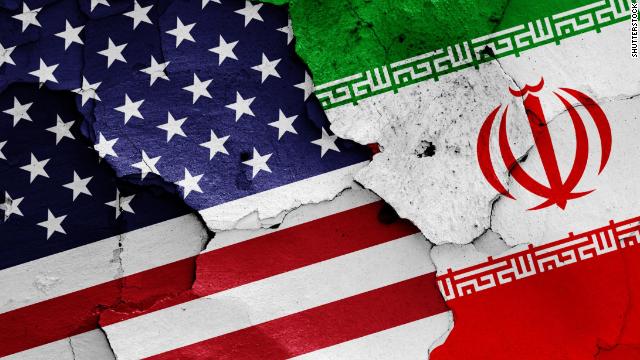
The contract asking whether active US military personnel will physically enter Iranian territory by December 31 is trading at 99.3% probability, with $17.9 million in volume. The odds have remained stable over the past 24 hours, indicating a settled market that has found an equilibrium price. At this probability level, traders are pricing in only a roughly 0.7% chance that no US military personnel will set foot on Iranian soil during the remainder of the year—a narrow window that accounts primarily for the passage of time without escalation rather than confidence that military action is likely.
Why It Matters
The near-certainty pricing reflects the structural reality of US-Iran relations and regional military dynamics. With the US maintaining significant military presence across the Middle East, the Persian Gulf, and Iraq—a country sharing a long border with Iran—the technical possibility of military personnel crossing into Iranian territory exists across multiple contingencies. These range from hot pursuit operations, to deliberate military strikes, to rapid border incursions in response to Iranian aggression or proxy attacks. The market's calibration suggests traders view the baseline geopolitical risk as elevated enough that complete avoidance of any ground entry over roughly six weeks constitutes the genuine outlier scenario.
Key Factors
Several structural factors support the high probability. First, the definition requires only that \"active US military personnel physically enter Iran at any point\"—a broad condition that encompasses special operations raids, emergency pursuits, or localized incursions, not necessarily a full-scale invasion. Second, the recent history of US-Iran tensions, including strikes and counter-strikes in 2024, establishes a context where escalation scenarios carry non-trivial probability. Third, the resolution excludes diplomatic entries and intelligence operatives, meaning the bar is set at kinetic or tactical military action rather than mere presence. Finally, the compressed timeframe (roughly six weeks remaining) compounds the probability: the longer the period, the higher the cumulative risk of some triggering event.
Outlook
Shifts in this market would likely require a substantial de-escalation in US-Iran regional tensions or explicit diplomatic agreements constraining military operations. Conversely, any flare-up in regional conflict, escalation by Iranian proxies, or direct Iranian action could reinforce the high probability. Because the contract's resolution hinges on a single binary outcome—any entry versus none—rather than scale or duration of military presence, even a brief tactical incursion would resolve it to \"Yes.\" Traders should monitor developments in Iraq, the Persian Gulf, and direct US-Iran incidents as the year closes; however, the market's current pricing suggests most participants view avoidance of ground entry as the tail risk rather than the baseline.