Market Overview
Prediction markets currently assess an 18.5% probability that Iran's Islamic Republic will be overthrown, collapse, or lose de facto control of governing structures by December 31, 2026. With over $16 million in trading volume, this represents a meaningful but minority-weighted outcome among traders. The probability has remained unchanged over the past 24 hours, indicating a lack of recent catalysts or shifting sentiment. The market's definition requires a genuine break in continuity—such as dissolution of the Supreme Leader's office, Guardian Council, or IRGC clerical control—rather than routine succession or reform.
Why It Matters
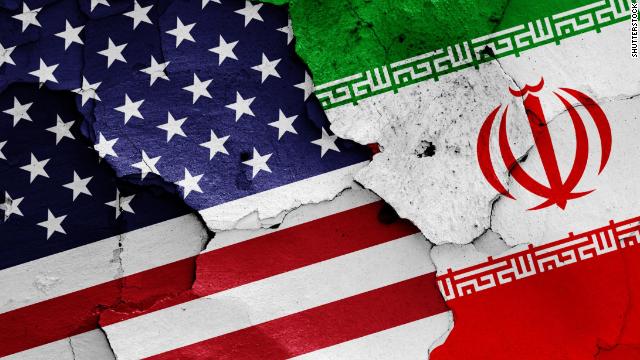
The question of Iranian regime stability carries significant implications for Middle Eastern geopolitics, regional security, and global energy markets. A collapse of the Islamic Republic would represent one of the most consequential political shifts of the decade, with cascading effects on U.S.-Iran relations, Israeli security calculations, and oil supply dynamics. Conversely, the regime's persistence despite sanctions, inflation, and periodic protest waves would validate assessments that its institutional structures and security apparatus remain too entrenched for near-term overthrow. The market's 18.5% floor suggests traders view regime change as a legitimate but low-probability scenario within the specified timeframe.
Key Factors
The regime's structural resilience—particularly the security apparatus comprising the Revolutionary Guards, Basij militia, and intelligence services—remains the primary factor suppressing higher probability estimates. These institutions have repeatedly demonstrated capacity to suppress mass protests, including the 2019-2020 unrest and the September 2022 demonstrations following Mahsa Amini's death. The Iranian population, while experiencing significant economic hardship from sanctions and mismanagement, has not coalesced into a unified revolutionary movement capable of challenging state security forces at scale.
Counterbalancing factors sustaining the 18.5% floor include chronic economic dysfunction, youth unemployment exceeding 25% in some estimates, currency depreciation, and persistent grievances around governance and personal freedoms. The regime's reliance on revolutionary ideology and patronage networks, while effective, creates brittleness if elite consensus fractures or security force loyalty deteriorates. International isolation and sectarian regional conflicts have also constrained the regime's resources and attention.
Outlook
The market's stability at 18.5% suggests traders view the next three years as unlikely to produce conditions sufficient for regime collapse. A substantial probability increase would likely require evidence of either a cascading security force defection, major schism within the Supreme Leader's inner circle, or a spark of revolution capable of overcoming demonstrated suppression capacity. Conversely, prices could drift lower if economic stabilization, sanctions relief, or successful internal succession (rather than collapse) occurs. Given the Islamic Republic's 45-year track record of surviving existential challenges and the compressed three-year timeframe, the current sub-20% assessment reflects historical precedent more than speculative positioning.