Market Overview
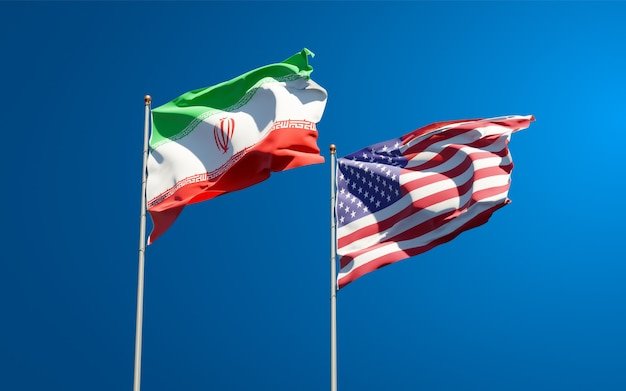
Prediction market participants are pricing the probability of Iran acquiring a confirmed nuclear weapon by December 31, 2026 at 9.6%, according to current market odds. With over $576,000 in trading volume, the market reflects moderate but sustained interest in one of the most contentious questions in international security. The probability has remained stable over the past 24 hours, suggesting traders have not identified significant recent developments that would shift the baseline assessment substantially in either direction.
Why It Matters
Iran's nuclear program has been a central flashpoint in Middle Eastern geopolitics for nearly two decades, affecting regional stability, energy markets, and U.S. foreign policy. The question of whether Iran possesses or will soon possess nuclear weapons carries implications for Israeli security, Gulf state dynamics, and broader nonproliferation efforts. The specific resolution criteria—requiring official confirmation from credible international agencies, Iran's government, or established news sources—sets a demanding threshold that would exclude mere technical capability in favor of declared or definitively confirmed weapons status.
Key Factors
The low single-digit probability reflects several constraining realities. First, international monitoring by the International Atomic Energy Agency (IAEA) continues despite diplomatic tensions, providing ongoing visibility into Iranian nuclear activities. Second, the technical and weaponization challenges remain substantial; uranium enrichment to weapons-grade levels is only one step in a complex process. Third, the resolution criteria require public confirmation rather than covert capability, a distinction that matters significantly for market outcome—Iran could theoretically advance its program without crossing the threshold of official acknowledgment. The market's assessment also accounts for geopolitical uncertainty: escalation or de-escalation in U.S.-Iran relations, changes in international sanctions regimes, and potential military intervention could all affect timelines.
Outlook
The market's current pricing suggests traders view a Iranian nuclear weapon declaration by end-2026 as unlikely but not negligible. Developments that could shift this probability upward include confirmed IAEA findings of weapons-grade enrichment, breakdown of remaining diplomatic channels, or direct Iranian government statements. Conversely, successful renewal of constraints through diplomacy, significant technical setbacks, or stronger international enforcement mechanisms would likely drive the probability lower. The 27-month timeline is relatively short for such a consequential shift, which partially explains the modest odds, but traders remain attentive to the possibility of rapid escalation in the region.