Market Overview
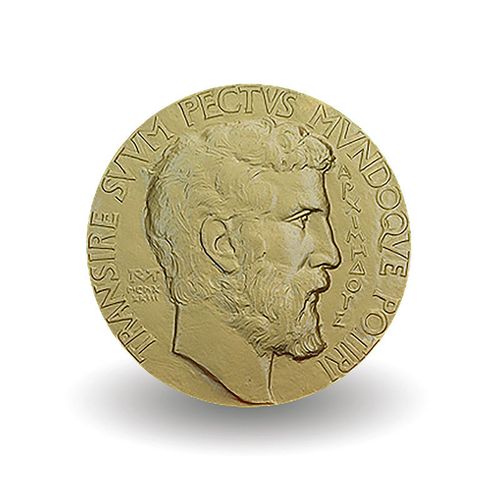
Yu Deng commands a 37% implied probability of winning the 2026 Fields Medal according to active prediction markets, with $116,553 in trading volume. The Fields Medal, awarded by the International Mathematical Union every four years to between two and four mathematicians under age 40, represents the highest honor in mathematics globally. The next ceremony will occur during the International Congress of Mathematicians scheduled for July 23-30, 2026, in an announcement format that has historically attracted significant professional attention and speculation within the mathematical community.
The current 37% odds assigned to Deng suggest markets view him as a credible but not dominant favorite among the eligible candidate pool. The probability has remained stable over the past 24 hours, indicating that traders have settled on a consensus valuation rather than responding to breaking news or recent developments. This stable pricing reflects the forward-looking nature of the market, which is pricing in expectations roughly 18 months before the award announcement.
Why It Matters
The Fields Medal carries substantial weight in academic mathematics, influencing career trajectories, institutional affiliations, and research funding. For a mathematician under 40, selection represents validation of contributions to mathematical theory and problem-solving that have altered the field's trajectory. Market participants trading in this contract are effectively making probabilistic assessments about which researcher's contributions will be deemed most significant by the IMU's selection committee when they convene in 2026. The outcome will have career implications for Deng and competing candidates, along with signaling effects for mathematical research priorities.
Key Factors
Several variables will influence whether Deng ultimately receives the medal. His recent publication record and the recognition his work has received from leading mathematicians in peer review will be central factors. The geographic and field-specific distribution of medals—historically the IMU aims for representation across mathematical subdisciplines and regions—may affect his chances relative to other strong international candidates. The competition intensity is inherently high, as the Fields Medal draws from a global pool of the most accomplished young mathematicians; the distribution of odds across multiple candidates implies no single mathematician is viewed as a lock for the award.
Outlook
The stability in market pricing at 37% suggests that available information about Deng's candidacy and the broader Fields Medal contender pool has been largely priced in. Movement in Deng's odds could result from publication of highly influential research papers before the 2026 deadline, major mathematical breakthroughs attributed to his work, or shifts in assessments of competing candidates. The market will likely remain relatively liquid given the prestige of the prize and professional interest among academic audiences, with any significant new information about Deng's recent achievements or the emerging competitive landscape potentially triggering repricing.