Market Overview
Yu Deng, a mathematician working in harmonic analysis and related fields, is currently assigned a 37% implied probability of receiving the Fields Medal at the International Congress of Mathematicians in July 2026. With substantial trading volume of $116,553, this market reflects genuine forecaster engagement with the question of which mathematicians under 40 will be honored at the quadrennial event. The 37% probability indicates that while Deng is viewed as a plausible winner, the prediction market is distributing significant probability mass across other candidates—a distribution consistent with the Fields Medal's selective nature, as the prize typically recognizes only two to four recipients globally.
Why It Matters
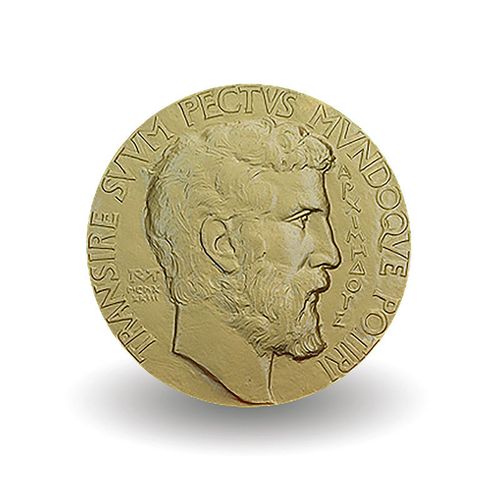
The Fields Medal represents mathematics' highest honor and carries career-defining significance for recipients. Unlike many scientific prizes that recognize lifetime achievement, the Fields Medal specifically targets mathematicians under 40, creating a defined cohort of potential winners in their prime research years. The 2026 ceremony will be watched closely by the mathematical community and broader academia as an indicator of which research areas and emerging talents the IMU's selection committee views as most important to contemporary mathematics. For researchers and institutions, accurate prediction of medal outcomes offers signals about research directions valued by the field's leadership.
Key Factors
Several elements drive Deng's 37% probability. His work in harmonic analysis and related areas represents established research strength, and his career trajectory places him within the age eligibility window. However, the Fields Medal selection process introduces substantial uncertainty: the IMU's international committee evaluates candidates across all mathematical disciplines, weighing factors including research originality, depth of contribution, and perceived impact on the broader field. The 37% probability implicitly reflects that while Deng has credentials meriting consideration, he faces competition from other accomplished mathematicians globally. Geographic diversity, representation across mathematical subfields, and the committee's subjective evaluation of research significance all influence outcomes in ways difficult for external observers to predict precisely. Additionally, the medal's restriction to two to four recipients means that even strong candidates face baseline probabilistic headwinds simply due to the small number of awards available.
Outlook
The market's stable 37% probability over recent periods suggests forecasters have incorporated available information about Deng's profile and research standing and see limited near-term catalysts for reassessment. Between now and the July 2026 ceremony, several developments could materially shift the probability: significant new research breakthroughs or publications from Deng could strengthen his candidacy, while corresponding advances by competing mathematicians could diminish relative positioning. The IMU may release indirect signals about award priorities or the committee's composition could shift the field's expectations. For market participants, the 37% probability suggests meaningful uncertainty remains—Deng is neither a consensus favorite nor a long-shot outsider, but rather one contender among a field of candidates with varying strengths. As the ceremony approaches and the mathematical community's collective assessment of recent research contributions crystallizes, probability adjustments should be expected.