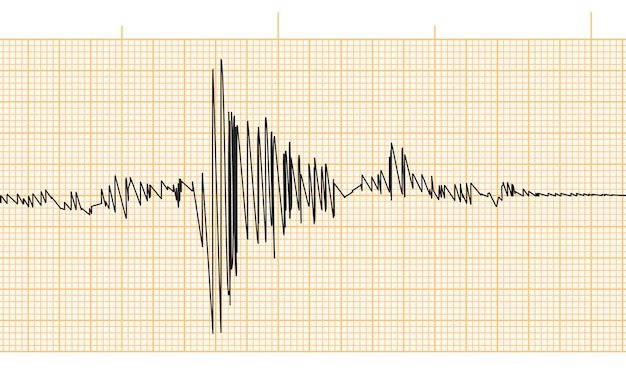
Market Overview
Prediction markets are currently pricing a slight majority likelihood—53.5%—that 2026 will pass without any confirmed volcanic eruptions reaching VEI 4 or higher on the Volcanic Explosivity Index. The market has held this odds level with $475,150 in cumulative volume, indicating meaningful but not overwhelming conviction among participants. The proposition effectively splits the market nearly in half, with traders displaying genuine disagreement about the probability of major volcanic events in the coming year.
Why It Matters
The Volcanic Explosivity Index provides a standardized scientific measure of eruption magnitude, with VEI 4 eruptions classified as \"cataclysmic\" and capable of producing significant regional impacts. Historical data tracked by the Smithsonian Institution's Global Volcanism Program offers the clearest baseline for assessing how unusual such eruptions are. Understanding the likelihood of major volcanic activity carries implications not only for volcanology but potentially for global climate, aviation safety, agriculture, and disaster preparedness planning. This market serves as an aggregate assessment of expert and informed-amateur expectations about future geological events.
Key Factors
Historical frequency provides the primary anchor for market pricing. Data from 2000 to 2024 shows that VEI 4 or higher eruptions occur relatively rarely but not extremely rarely on a global basis—the Smithsonian program tracks several such events per decade on average. This baseline suggests that zero events in a single year is plausible but notably below the multi-year mean. The near-even split in this market reflects genuine uncertainty: eruptions remain difficult to predict with precision, and natural geological cycles can produce clustering of major events or extended quiet periods unpredictably.
Volcanologists have not issued high-confidence predictions of imminent major eruptions for 2026, which may anchor sentiment toward the \"no major eruptions\" side. Conversely, the existence of numerous active volcanic systems worldwide and the inherent unpredictability of volcanic behavior support a substantial probability assigned to the \"at least one major eruption\" outcome. The 53.5% probability does not suggest strong market confidence in zero events—it represents near-maximum uncertainty expressed as a slight lean.
Outlook
This market will remain sensitive to any emerging volcanic unrest or scientific assessments suggesting elevated risk in particular regions during 2026. Sustained seismic activity, gas emissions, or deformation at monitored volcanoes could shift market odds materially. Conversely, passage of months without significant precursory activity at major volcanic centers could gradually increase the odds of the zero-eruption outcome. The resolution mechanism tied to the Smithsonian Global Volcanism Program's official compilation provides clarity, though the wait until March 31, 2027 for finalized data means market prices may shift substantially as year-end approaches and the eruption record for 2026 becomes clearer.