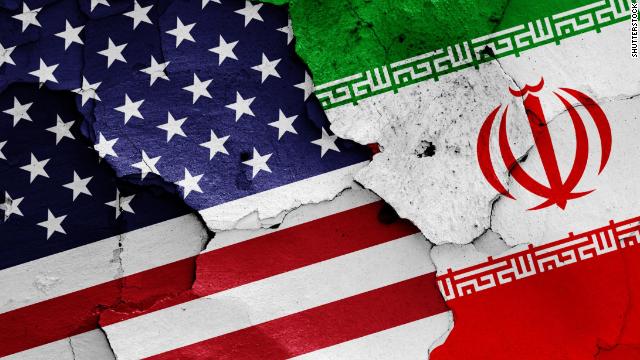
Market Overview
The prediction market on potential US military entry into Iran has settled at a 99.3% probability of \"No\" — effectively pricing direct US military intervention as nearly impossible within the calendar year. With $17.9 million in volume, the market reflects broad consensus that despite decades of US-Iran tension and recent military incidents, an actual ground incursion by active-duty American forces remains an extraordinarily unlikely scenario. The probability has held steady over the past 24 hours, indicating stable market sentiment rather than reaction to breaking developments.
Why It Matters
The question targets a specific and consequential threshold: direct military intervention involving US personnel on Iranian soil. Such an event would represent a dramatic escalation in Middle East geopolitics, potentially triggering regional conflict, international condemnation, and major disruptions to global energy and financial markets. The market's pricing suggests participants view the diplomatic, military, and political costs of such action as prohibitive for US policymakers, even amid periods of heightened US-Iran hostility. The precise definitional parameters — excluding aerial or maritime incursions, diplomatic missions, and contractor personnel — narrow the resolution criteria to unambiguous combat or special operations scenarios.
Key Factors
Several structural factors underpin the market's assessment. First, direct military invasion of a nation of 89 million people with significant defensive capabilities would require explicit political authorization and represent an extraordinary expansion of existing US military posture in the region. Second, the US maintains extensive military assets and partnerships throughout the Middle East — from bases in Iraq, Saudi Arabia, and the UAE to naval operations in the Persian Gulf — that serve as deterrents and alternatives to ground incursion. Third, international law, congressional authority requirements, and allied consensus considerations create institutional friction against such action. Fourth, Iran's possession of anti-ship missiles, advanced air defenses, and asymmetric capabilities creates meaningful operational costs. Finally, no imminent trigger event — such as a direct armed attack on US territory or personnel — has materialized that would typically justify such escalation in contemporary US military doctrine.
Outlook
For this probability to shift materially higher, markets would likely require evidence of concrete planning, a significant escalatory incident, explicit policy statements from senior US officials, or regional developments that fundamentally altered threat calculations. Conversely, any de-escalation in US-Iran tensions or diplomatic progress would reinforce the current market pricing. The consistency of the 99.3% probability over recent days suggests the market has absorbed available information and is pricing this outcome based on structural, rather than event-driven, assessments. Traders should monitor developments in Iran's nuclear program negotiations, regional proxy activities, and statements from US military and political leadership as potential volatility triggers, though the current market pricing reflects a baseline expectation that year-end remains too near for such a major strategic decision to materialize.