Market Overview
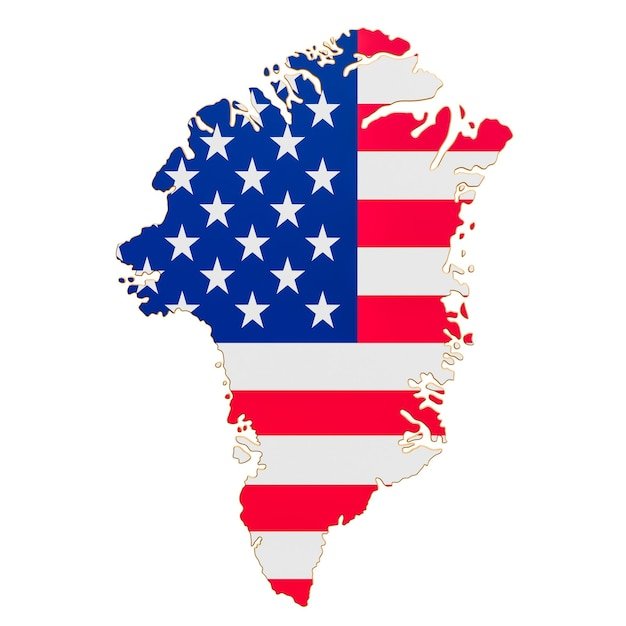
Prediction market participants are pricing a 16.5% probability that the United States will acquire control over any portion of Greenland by December 31, 2026, with trading volume exceeding $9.5 million. The market has shown modest stability over the past 24 hours, declining slightly from 17.5%, suggesting traders remain cautious about the prospect despite continued public discussion of a potential acquisition.
The market's definition of \"acquisition\" is deliberately narrow and strict: it requires a binding agreement or legal instrument transferring sovereignty, establishing primary US jurisdiction, or resulting from the use of force. Simple basing rights, commercial concessions, leases, or non-binding statements do not qualify, establishing a high threshold for resolution.
Why It Matters
Greenland holds strategic significance for the United States due to its Arctic location, mineral resources, and geopolitical positioning relative to China and Russia. The Trump administration has publicly discussed acquiring or gaining greater control over Greenland, reviving a concept that has periodically surfaced in US foreign policy discourse. However, Greenland is an autonomous territory within the Danish realm, and any territorial transfer would require the consent of both Denmark and Greenland's government—a prospect both have firmly rejected in public statements.
Key Factors
Several structural impediments constrain the probability. Denmark and Greenland have consistently stated that Greenland is not for sale, and Greenlandic political leadership has emphasized territorial integrity. The legal framework would require either a binding treaty ratified by the Danish Folketing and Greenlandic Inatsisartut, or enforcement through military action—an outcome most analysts view as highly improbable given NATO alliance structures and international law norms.
Conversely, factors supporting a non-negligible probability include the Trump administration's demonstrated willingness to pursue unconventional foreign policy objectives, ongoing strategic competition in the Arctic, and the possibility of negotiated arrangements that fall short of formal territorial transfer but still satisfy the market's resolution criteria. Unforeseen geopolitical crises, changes in Greenlandic or Danish government positions, or shifts in strategic calculations could theoretically open space for negotiation.
The 16.5% probability suggests traders view the outcome as unlikely but not negligible—consistent with the assessment that while formal acquisition faces formidable obstacles, the political attention directed toward Greenland by the Trump administration creates sufficient uncertainty to merit a meaningful market price.
Outlook
Market participants will likely monitor several developments: any escalation in US administrative rhetoric or formal proposals; responses from the Danish or Greenlandic governments; changes in political leadership in Copenhagen or Nuuk; and broader Arctic geopolitical developments. Near-term movement in the market probability would most likely result from concrete diplomatic initiatives or binding legislative or treaty proposals, rather than statements alone. The current pricing reflects a baseline assumption that legal and diplomatic constraints prevail, while maintaining exposure to tail-risk scenarios in which geopolitical incentives overcome historical precedent.