Market Overview
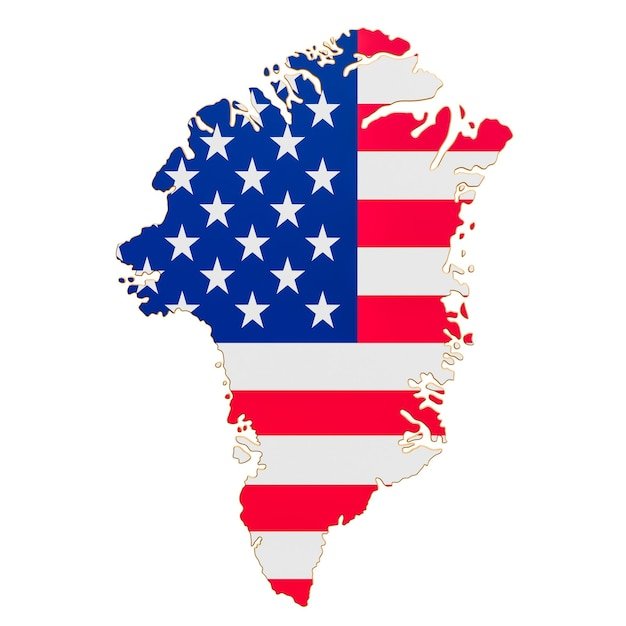
Prediction markets have settled on a 14% probability that the United States will acquire sovereignty or primary exclusive jurisdiction over any defined territory in Greenland within the next two years. With $9.7 million in trading volume, the market has attracted significant attention despite the low odds. The probability has remained stable over the past 24 hours, suggesting traders have reached a consensus view that actual territorial acquisition remains a remote scenario, even as high-level discussions about Greenland continue.
Why It Matters
The question addresses a geopolitical topic that has moved from speculative commentary to intermittent policy discussion, particularly given Greenland's strategic Arctic location and resources. Any U.S. acquisition of Greenlandic territory would represent an extraordinary expansion of American sovereignty and would reshape Arctic geopolitics. The market's resolution criteria are deliberately stringent, requiring binding legal instruments—such as treaties, legislation, or executive agreements—that formally transfer sovereignty or establish exclusive U.S. jurisdiction. This high bar reflects the scale of such an outcome and the need for credible, documented proof rather than announcements or negotiations alone.
Key Factors
Several structural obstacles explain the market's modest 14% assessment. Denmark maintains sovereignty over Greenland under the Kingdom of Denmark framework, and any transfer of Greenlandic territory would require the explicit consent of both Copenhagen and Greenland's government. Greenland, an autonomous territory with significant self-governance, has shown limited appetite for sovereignty transfer to Washington. International law and established norms around territorial integrity add additional friction. The timeframe is also constraining: achieving a binding agreement and meeting the December 31, 2026 deadline requires political consensus in the U.S., Denmark, and Greenland—each with competing interests—to materialize within roughly 24 months. While recent rhetoric has occasionally raised the salience of Greenland in U.S. discourse, translating rhetoric into binding legal instruments demands a level of diplomatic alignment and political will that current conditions do not suggest. The resolution criteria explicitly exclude non-binding statements, proposals, and military or strategic base arrangements that fall short of sovereignty or exclusive jurisdiction transfer, further narrowing the paths to a \"Yes\" outcome.
Outlook
For the probability to shift meaningfully upward, concrete diplomatic progress—such as formal negotiations, public statements from Greenlandic and Danish leadership expressing openness, or draft treaty language—would need to emerge. Such developments remain speculative. Conversely, explicit rejections by Denmark or Greenland, or a shift in U.S. policy priorities away from Arctic territorial acquisition, could drive odds lower. The stability of the 14% probability over recent periods suggests the market is pricing in a baseline expectation of low-probability tail risk: the remote but non-zero possibility that unforeseen geopolitical shifts or policy changes could create conditions for territorial negotiation. Traders appear to view any acquisition by end-2026 as unlikely, yet not impossible.