Market Overview
Prediction markets are currently pricing the probability of Ukrainian territorial recapture in Crimea by December 31, 2026 at 8.5%, with trading volume exceeding $2.4 million indicating substantial interest in the outcome. The probability has remained stable over the past 24 hours, suggesting market consensus around this assessment. The question sets a specific resolution standard using the Institute for the Study of War (ISW) map as the primary arbiter, requiring visible Ukrainian territorial gains to persist through a full ISW daily update cycle to qualify.
Why It Matters
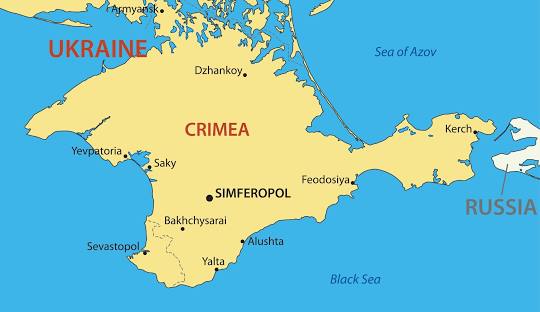
Crimea represents one of the most strategically significant territorial questions in the Russia-Ukraine conflict. Russia annexed the peninsula in 2014, and its recapture has become a touchstone of Ukrainian sovereignty objectives. However, the extremely low probability assigned by markets underscores the consensus view that reclaiming Crimean territory represents a near-term military impossibility. The question's relevance extends beyond battlefield considerations to encompass potential diplomatic settlements, which the resolution criteria explicitly include as qualifying for a \"Yes\" outcome if actual Ukrainian control is established.
Key Factors
Several factors constrain the probability to such low levels. Crimea remains heavily fortified with Russian military installations, including naval bases critical to Russian Black Sea operations, making any offensive to recapture territory extraordinarily costly. As of 2024-2025, Ukrainian forces face significant resource constraints and have made limited territorial gains in other regions, making a major amphibious or overland operation into Crimea logistically daunting. The geographic separation of Crimea from mainland Ukraine adds another layer of difficulty, requiring either a breakthrough across occupied Donetsk and Luhansk regions or an amphibious crossing of the Black Sea.
The only pathway carrying meaningful probability appears to be diplomatic resolution. The criteria explicitly allow for negotiated settlements granting Ukraine de facto control to trigger a \"Yes\" resolution, though not mere announcements of de jure control. This suggests markets assign limited credibility to near-term peace negotiations that would result in Ukrainian control, particularly given Russian strategic prioritization of Crimea.
Outlook
The 8.5% probability could shift materially under specific scenarios: a major Russian military collapse enabling rapid Ukrainian advances, or international diplomatic pressure producing a settlement favorable to Ukrainian interests. Conversely, further deterioration of Ukraine's position or formalization of Russian control through international recognition could push probabilities even lower. Market participants should monitor ISW map updates closely, as the resolution criteria require persistent territorial shading across daily update cycles, making any Ukrainian gain subject to precise documentation standards.