Market Overview
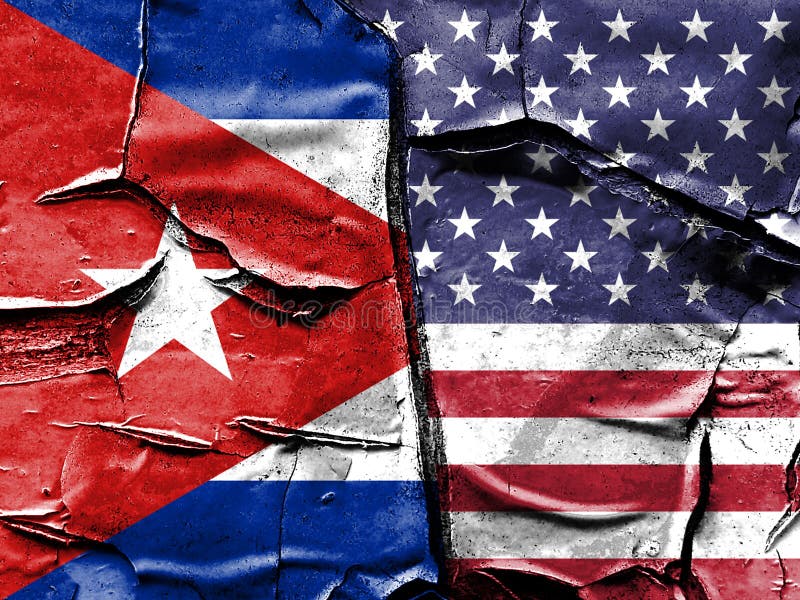
Prediction markets currently price the likelihood of a U.S. military invasion of Cuba in 2026 at 26.5%, representing meaningful tail risk despite the scenario remaining unlikely in base-case assessments. With over $1.5 million in trading volume, the market reflects genuine uncertainty among participants about potential outcomes over the next 12-18 months. The probability has remained stable at this level over the past 24 hours, suggesting a consensus view rather than reactive positioning to breaking news.
Why It Matters
A U.S. military intervention in Cuba would represent the most significant shift in Western Hemisphere geopolitics in decades, with cascading implications for regional stability, NATO cohesion, and broader U.S. foreign policy. The resolution criteria specify control of \"any portion\" of Cuban land territory, a deliberately broad standard that could encompass limited operations rather than full-scale occupation. The market's willingness to price this scenario at over one-quarter probability underscores how seriously participants view residual geopolitical risk in a context of rising great-power tensions and unpredictable policy shifts.
Key Factors
Several elements appear to be anchoring elevated odds. Political instability in Cuba, economic deterioration, and humanitarian crises could theoretically create pretexts for intervention or create conditions where such scenarios become thinkable in U.S. policy circles. The Biden and potential Trump administrations have pursued markedly different approaches to Cuba policy; a shift in executive priorities could alter cost-benefit calculations around intervention. Additionally, broader U.S.-China strategic competition and concerns about influence in the Western Hemisphere may be factored into market assessments. However, substantial counterweights exist: the legal and diplomatic costs of invasion remain severe, no credible evidence suggests imminent U.S. military planning, and Cuba's geographic proximity to the U.S. means any escalation would be preceded by visible intelligence and diplomatic warnings.
Outlook
For odds to move meaningfully higher, markets would likely require signals of concrete military preparations, dramatic deterioration in Cuba's political situation with humanitarian emergency, or explicit policy statements from U.S. leadership. Conversely, sustained stability in Cuba, de-escalation in great-power tensions, or clear diplomatic engagement could reduce the probability. The current 26.5% level appears to reflect genuine tail-risk pricing—acknowledging non-trivial geopolitical uncertainty while maintaining skepticism about near-term action. The market will likely remain sensitive to shifts in U.S. political leadership, Cuban domestic developments, and broader regional security dynamics through the resolution window.