Market Overview
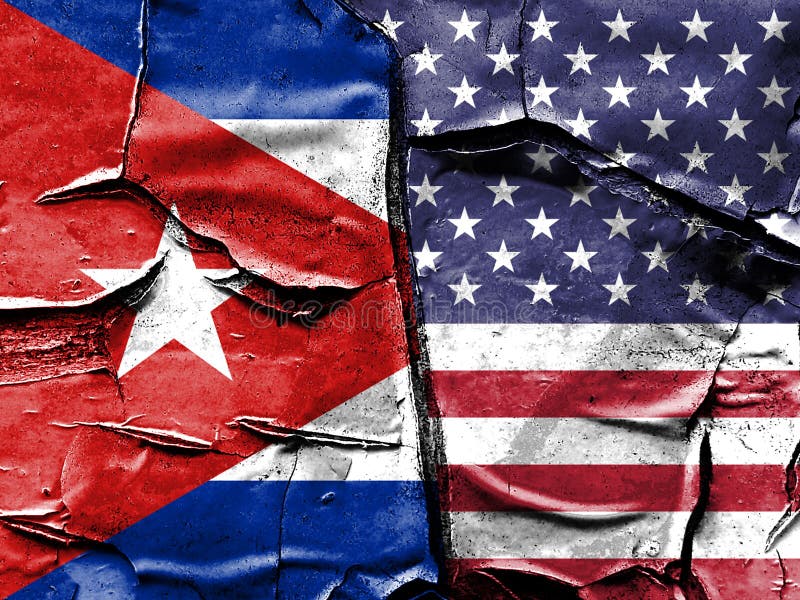
Prediction market traders are currently pricing in a 26.5% probability that the United States will launch a military invasion of Cuba aimed at establishing territorial control by December 31, 2026. With over $1.5 million in volume, the market has maintained stable odds over the past 24 hours, suggesting traders have reached a relative consensus on the likelihood of such an extraordinary geopolitical event. The probability is notably elevated relative to historical baseline assumptions about great power military interventions, yet remains a clear minority outcome, indicating market participants view an invasion as unlikely despite meaningful tail risks.
Why It Matters
A U.S. military invasion of Cuba would represent one of the most significant geopolitical events in decades, with cascading implications for hemispheric relations, global power dynamics, and international law. Such an action would fundamentally alter U.S.-Latin American relations, potentially triggering responses from Russia and China, both of which maintain strategic interests in the Caribbean. For prediction market participants, the outcome hinges on whether specific triggers—ranging from humanitarian crises to political upheaval to provocative actions by the Cuban government—might overcome the substantial diplomatic, military, and political costs of invasion.
Key Factors
Several structural conditions appear to underpin the current 26.5% assessment. First, U.S.-Cuban relations remain deeply strained, with sanctions regimes in place and no near-term diplomatic resolution visible. Second, Cuba's internal political situation has experienced economic deterioration and social unrest in recent years, which some analysts suggest could theoretically create conditions viewed as justifying intervention by policymakers. Third, the resolution window is relatively short—just over one year—which naturally constrains the probability of such a major military undertaking requiring substantial political will and strategic coordination.
Counterbalancing these factors are powerful structural constraints. The post-Cold War international environment has made unilateral military interventions significantly costlier and less acceptable, as illustrated by recent U.S. experiences in Iraq and Afghanistan. Cuba's geographic proximity to U.S. allies and the presence of Russian military assets on the island create escalation risks. Additionally, the requirement that any invasion establish \"control over any portion of Cuban land territory\" sets a high threshold—token military actions or airstrikes would not resolve the market affirmatively.
Outlook
The stability in odds over the 24-hour window suggests the market has absorbed available information and reached an equilibrium valuation. Movement in this market would likely require either a dramatic shift in U.S. political leadership and strategic doctrine, a major humanitarian or security crisis in Cuba, or an action by the Cuban government perceived as sufficiently provocative to overcome institutional resistance to invasion. Traders should monitor U.S. election cycles, Cuban domestic conditions, and any changes to the diplomatic stance toward Havana, as these represent the primary vectors through which the probability could materially shift in either direction.