Market Overview
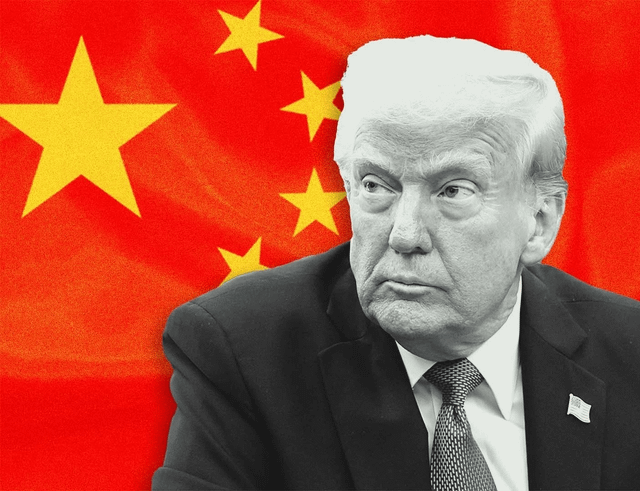
Prediction market participants are pricing an extremely low probability—1.1%—that President Donald Trump will make an official visit to China within the next 15 months. The market has drawn substantial interest with $11.2 million in trading volume, yet the minute odds reflect a consensus view among traders that such a visit remains highly unlikely in the specified timeframe. The probability has ticked down marginally from 1.3% over the past 24 hours, though this negligible movement underscores the stability of bearish sentiment rather than a dramatic shift in expectations.
Why It Matters
A presidential visit to China would carry significant geopolitical weight, potentially signaling a thaw in U.S.-China relations or at minimum a willingness to engage in high-stakes face-to-face diplomacy. Current bilateral tensions spanning trade, technology, Taiwan, and military posturing have created an adversarial environment that makes such a trip diplomatically fraught. For markets and policymakers, a Trump visit would suggest a major recalibration in the world's most consequential bilateral relationship. The market's pricing thus serves as a proxy for how traders assess the likelihood of meaningful diplomatic de-escalation in the near term.
Key Factors
Several structural factors support the market's skepticism. First, the Trump administration's stated approach to China has emphasized economic and strategic competition rather than accommodation, with ongoing tariff tensions and technology restrictions. Second, the April 2026 deadline is relatively near-term, allowing limited runway for the diplomatic groundwork such a visit would require. Third, domestic political considerations in both nations complicate high-profile engagement; in the U.S., China remains a sensitive political issue, while in China, such a visit would require careful orchestration around internal priorities. Finally, the current state of U.S.-China relations shows few signs of the warming necessary to justify a presidential visit at this juncture.
Outlook
For the probability to shift materially higher, several developments would likely be necessary: a significant breakthrough in trade negotiations, a major geopolitical event requiring direct presidential engagement, or an unexpected diplomatic initiative from either side. Conversely, further deterioration in bilateral relations or escalation over flashpoint issues could drive the odds even lower. Market participants will likely remain cautious unless concrete signals emerge of changing diplomatic posture. The current pricing reflects a market baseline that views a Trump China visit by April 2026 as a low-probability tail risk rather than a plausible near-term scenario.