What Happened
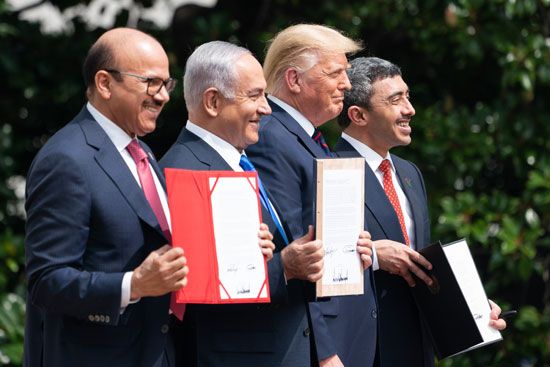
A prediction market tracking the likelihood of Syria formally signing an Abraham Accords normalization agreement with Israel before 2027 experienced a significant 15.5 percentage point decline, dropping from 41.0% to 25.5%. The move occurred on substantial trading volume of $147,259, indicating broad-based repricing rather than isolated trading activity. The shift represents a meaningful contraction in market expectations regarding Syrian participation in the U.S.-brokered diplomatic framework that has already drawn signatures from the United Arab Emirates, Bahrain, Sudan, and Morocco.
Why It Matters
The market movement reflects traders' updated assessment of near-term prospects for Syrian-Israeli normalization—a geopolitically significant question given Syria's centrality to Middle Eastern power dynamics and its historical role in Arab-Israeli conflict. Syria's potential accession would represent a major diplomatic breakthrough, as the Assad government has maintained adversarial relations with Israel and hosts Iranian military assets. The sharp repricing suggests new information has shifted expectations downward regarding either Syrian government willingness or the likelihood of conditions conducive to such an agreement materializing within the four-year window.
Market Context
The Abraham Accords framework, launched in 2020, initially represented an alternative to traditional Arab-Israeli peace negotiations. While the accord has successfully expanded to include multiple signatories, Syria's participation has remained uncertain due to ongoing civil conflict, Assad regime positioning within Iranian and Russian spheres of influence, and the absence of diplomatic signals from Damascus. Market participants had apparently maintained modest odds of Syrian participation at 41%, but the latest trading activity suggests that assessment has been reassessed as overly optimistic.
Outlook
The market pricing at 25.5% now reflects lower confidence in Syrian normalization by 2026, though the outcome remains classified as possible rather than improbable. Traders will likely continue monitoring Syrian government statements, developments in Israeli-Syrian border dynamics, and broader Middle Eastern geopolitical shifts for signals that could either further depress these odds or trigger a reversal. The persistence of meaningful trading volume suggests the market views this question as substantive and unsettled, rather than decisively resolved.