Market Overview
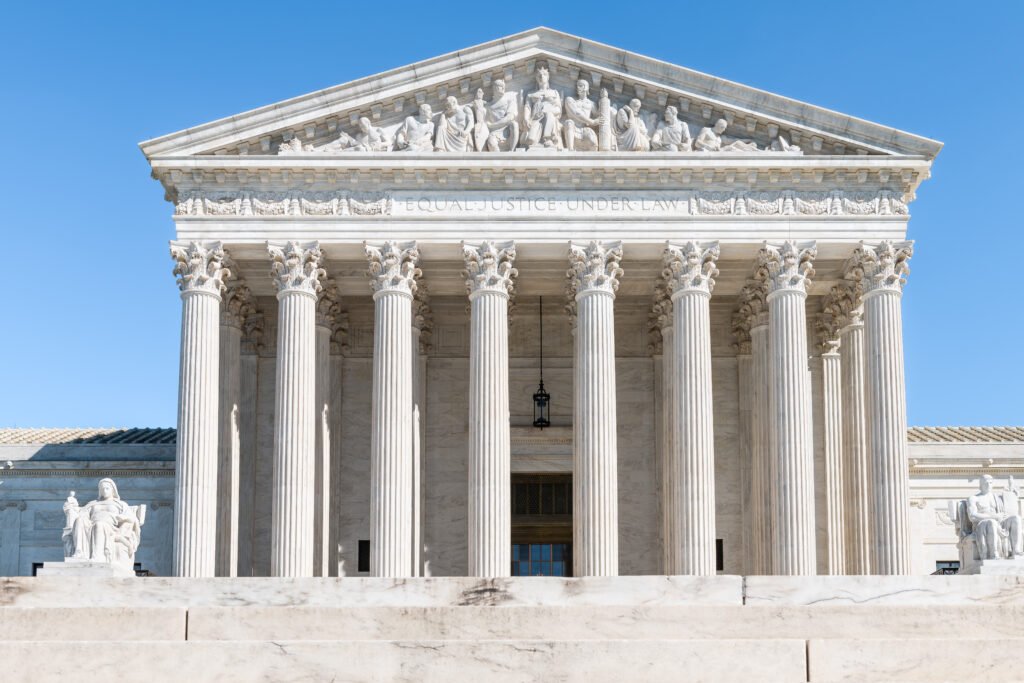
Prediction market traders are pricing a 13.5% chance that the Supreme Court of the United States will grant certiorari in a case explicitly addressing the legality or regulation of sports event contracts by July 31, 2026. With trading volume exceeding $929,000, the market reflects modest but sustained interest in whether SCOTUS will intervene in what remains a nascent area of federal sports betting litigation. The current odds have held stable over the past 24 hours, suggesting traders have reached a relative consensus on the low probability of Supreme Court involvement in this specific issue within the timeframe.
Why It Matters
The regulatory framework governing sports event contracts sits at the intersection of commodity law, federal gambling prohibition, and state-level sports betting authorization—creating genuine legal uncertainty. If SCOTUS were to grant certiorari, it could potentially resolve whether contracts tied to sporting outcomes constitute derivatives under the Commodity Exchange Act, whether federal regulation via the CFTC preempts state gambling laws, or whether federally licensed markets can legally offer such products. The outcome would have significant implications for the emerging legal sports betting industry, which has expanded dramatically following PASPA's repeal in 2018. However, traders appear skeptical that the Court will deem such a case sufficiently mature or consequential to warrant full review.
Key Factors
The low probability reflects several structural barriers to Supreme Court review. First, the Supreme Court receives thousands of certiorari petitions annually but grants only 70-80, making acceptance inherently rare. Second, SCOTUS typically waits for circuit splits or sustained litigation at lower courts before intervening—and most sports betting cases remain in early stages or are being resolved through regulatory channels rather than litigation. Third, the specific factual scenarios outlined in the market description—involving commodity law, CFTC jurisdiction, and state-federal regulatory conflicts—would need to ripen through the federal court system and generate conflicting appellate decisions before the Court would likely see it as a priority. The 18-month timeframe (through July 2026) further compresses the window for a case to be fully briefed and certiorari-ready.
Outlook
For the \"Yes\" outcome to materialize, litigation over sports contracts would need to accelerate significantly, produce a federal appellate decision on one of the specified issues, and convince the Supreme Court that the question warrants their docket space. Key developments that could shift probabilities include a circuit court ruling on whether sports contracts are CFTC-regulated derivatives, a major legal dispute between federal and state authorities over federally licensed sports markets, or a high-profile conflict between major exchanges and regulators. Absent such catalysts, traders expect the Court to remain on the sidelines, allowing regulation to develop through administrative and legislative channels. The 13.5% price thus reflects a baseline acknowledgment that Supreme Court action is possible but unlikely unless the legal landscape undergoes substantial change.