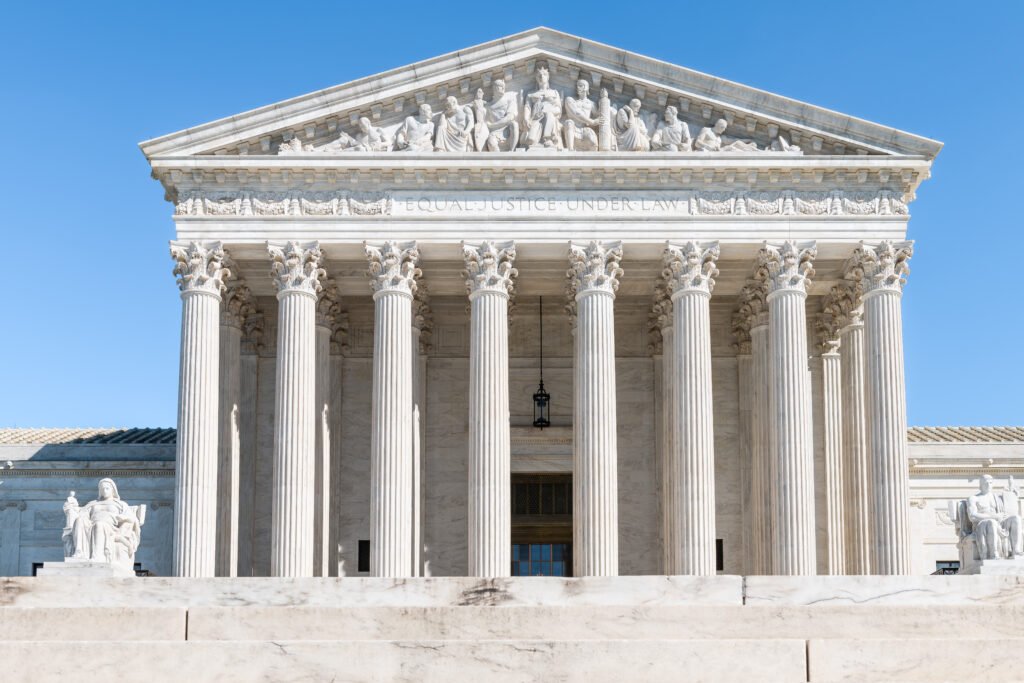
Market Overview
The prediction market on whether the Supreme Court will grant certiorari in a sports event contract case by mid-2026 is pricing in a relatively low probability of 13.5%, with stable pricing over the past 24 hours and moderate volume of approximately $929,000. The market specifically tracks whether SCOTUS accepts a case addressing one of three legal questions: whether sports event contracts are regulated derivatives under the Commodity Exchange Act, whether federal CFTC regulation preempts state gambling laws, or whether federally licensed sports markets can be restricted by authorities. The narrow scope of the resolution criteria—requiring explicit Supreme Court docket confirmation—reflects the precise nature of this legal question.
Why It Matters
The regulatory status of sports event contracts remains unsettled across federal and state jurisdictions, with the CFTC, state gambling regulators, and Congress all exercising varying degrees of authority. A Supreme Court case on this topic could fundamentally clarify whether these contracts are financial derivatives, gambling products, or something else entirely—with significant implications for platforms offering such products and for state regulatory autonomy. The relatively low probability assigned by this market suggests participants believe such foundational questions are unlikely to reach the nation's highest court within the specified timeframe, despite ongoing regulatory uncertainty.
Key Factors
Several structural barriers weigh against early SCOTUS involvement. The Supreme Court receives thousands of petitions annually but grants certiorari to fewer than 100 cases, meaning the justices typically select only issues of the broadest constitutional or statutory significance. Sports event contract regulation, while economically important, may lack the systemic urgency or conflict between circuit courts that typically triggers Supreme Court review. Additionally, the regulatory landscape is still evolving, with relatively few appellate decisions establishing conflicting precedents that would create the circuit split often necessary to capture SCOTUS attention. The market's 13.5% probability implies participants see less than a one-in-seven chance of a qualifying petition being filed and granted within 18 months.
Outlook
Several developments could shift market odds. A major enforcement action by the CFTC or state regulators that results in appellate litigation could accelerate a case toward SCOTUS review, particularly if lower courts reach conflicting conclusions. Congressional action clarifying the regulatory regime might paradoxically increase the likelihood by settling which agency has authority, potentially prompting litigation over new rules. Conversely, continued administrative resolution of these questions through agency guidance could reduce the probability further, as courts and the market may wait for regulatory clarity before seeking Supreme Court intervention. Market participants should monitor ongoing CFTC rulemaking efforts and any significant state-federal regulatory conflicts as potential catalysts.