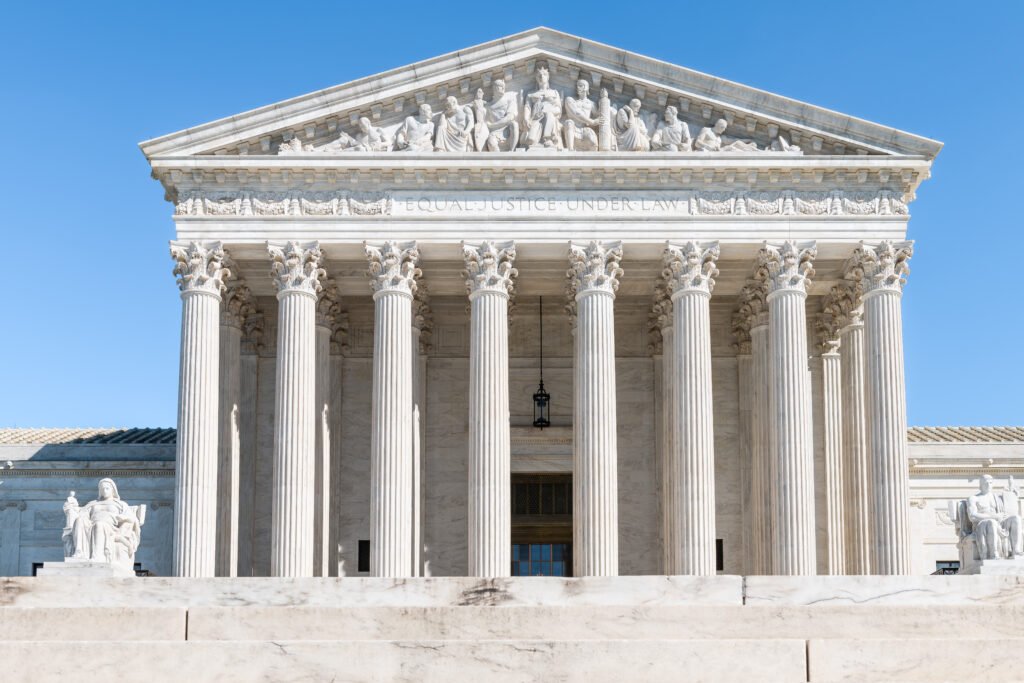
Market Overview
The Supreme Court's docket remains unsettled on whether it will accept a case concerning the regulation and legality of sports event contracts as derivatives instruments by July 31, 2026. With current odds at 13.5%, the market reflects significant skepticism that SCOTUS will grant certiorari on this relatively novel issue before the deadline. The $929,000 in volume traded suggests moderate interest from legal and financial professionals tracking the intersection of commodities regulation, state gambling law, and emerging digital markets.
Why It Matters
The outcome carries implications for a growing sector of federally licensed prediction and derivatives platforms that offer contracts tied to sports event outcomes. The case specifications address three specific regulatory questions: whether such contracts qualify as derivatives under the Commodity Exchange Act, whether federal CFTC oversight preempts state gambling restrictions, and whether states retain authority to prohibit or restrict federally licensed offerings. A Supreme Court decision could reshape the competitive landscape for platforms navigating ambiguous jurisdictional boundaries, while a decision to deny certiorari would likely force continued litigation in lower courts and administrative bodies.
Key Factors
Several structural barriers explain the low probability. First, Supreme Court certiorari requires that cases involve significant constitutional or statutory questions, acknowledged circuit splits, or matters of national importance sufficiently pressing to warrant nine justices' limited time. Sports derivatives regulation, while economically relevant, has not yet produced conflicting appellate decisions or demonstrated the urgency typically needed for cert grants. Second, the regulatory landscape remains in flux—the CFTC, state gambling commissions, and state legislatures are actively shaping policy, meaning courts may prefer to observe administrative and legislative developments before intervening. Third, the 18-month window is compressed; cases typically percolate through district and appellate courts over years before reaching the Supreme Court's consideration.
Outlook
Market participants would likely need to see either a sharp appellate court ruling creating a genuine circuit split or mounting political pressure for federal clarity to shift these odds materially upward. Absent such catalysts, the 13.5% probability reflects a baseline expectation that lower-court litigation will dominate the near term. Developments such as a high-profile appellate decision, expanded state-level bans conflicting with federal licensing, or explicit CFTC guidance deemed legally inadequate could alter the trajectory. Conversely, if regulators and platforms reach informal accommodations or if Congress addresses the issue legislatively, the probability of Supreme Court intervention could decline further.