Market Overview
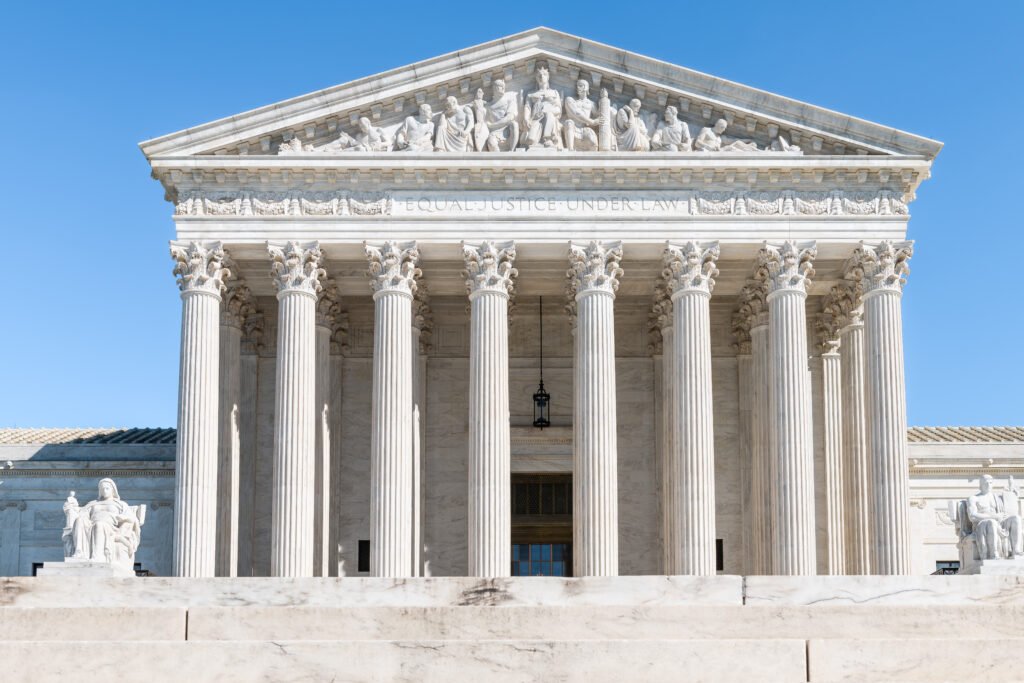
Prediction markets currently price the probability of Supreme Court certiorari on a sports event contract case at 13.5%, with substantial volume of nearly $930,000 suggesting moderate trader interest in this niche legal question. The market is asking whether SCOTUS will grant a writ of certiorari—the first critical hurdle for Supreme Court review—in a case addressing the regulation, legality, or jurisdictional authority of contracts tied to sports outcomes by July 31, 2026. The narrow timeframe and specific legal triggers outlined in the resolution criteria mean this outcome depends not only on case development but on the Court's discretionary decision to review the matter.
Why It Matters
The regulatory status of sports event contracts remains unsettled in U.S. law, with potential implications for financial derivatives markets, state gambling authorities, and federal commodity regulators. If sports outcome contracts are classified as regulated derivatives under the Commodity Exchange Act, it could reshape how such instruments are traded. Conversely, if federal regulation preempts state-level gambling laws, or if federally licensed platforms gain legal clarity, the competitive and business landscape for sports prediction markets could shift significantly. A Supreme Court intervention would signal that lower courts had produced conflicting interpretations or that the question carried sufficient constitutional weight to warrant the nation's highest court's attention.
Key Factors
Several conditions must align for this market to resolve \"Yes.\" First, a qualifying case must be filed and progress through the federal judiciary, generating sufficient legal questions to attract certiorari petitions. Second, the case must touch on at least one of three specific issues: CEA derivative classification, CFTC-versus-state authority, or the legality of federally licensed sports contract platforms. Third, the Supreme Court must choose to grant certiorari—a notoriously selective process in which the Court receives roughly 7,000 petitions annually but accepts fewer than 100 cases. The 18-month window (through July 2026) constrains the timeline, as cases typically require years to work through trial and appellate courts before reaching certiorari stage. Additionally, the lack of established Supreme Court precedent in this domain and the Court's general reluctance to intervene in emerging regulatory disputes may reduce the probability of acceptance.
Outlook
The current 13.5% probability reflects skepticism that the conditions for Supreme Court review will coalesce within the timeframe. For the probability to shift materially upward, a lower court decision would need to generate meaningful legal conflict—either between circuits or between federal and state authorities—that signals the need for SCOTUS clarification. Developments such as a high-profile federal appellate ruling striking down a state gambling restriction, a split decision among circuit courts, or a major enforcement action by the CFTC against sports contract platforms could increase petitioner motivation and Court interest. Conversely, regulatory clarity emerging from Congress or administrative agencies could reduce the legal uncertainty that might otherwise prompt Supreme Court intervention, further diminishing the odds of certiorari grant by mid-2026.