Market Overview
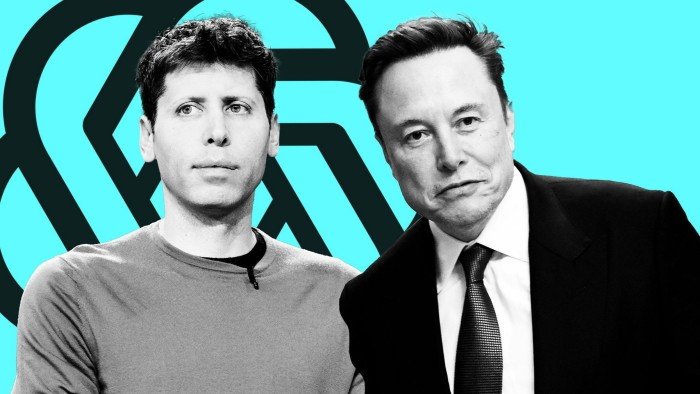
Elon Musk's litigation against Sam Altman and associates in U.S. District Court for the Northern District of California currently trades at a 37% probability of success, according to prediction market participants. The case remains in early to mid-stage litigation, with no recent sharp movements in implied odds. The $196,442 in trading volume indicates modest but consistent market interest in the outcome. Traders are pricing in a scenario where Musk's legal challenge faces material headwinds, though the outcome remains genuinely uncertain given the nascent stage of proceedings.
Why It Matters
The dispute centers on allegations related to OpenAI's governance, strategic direction, and business practices—issues that have generated significant public attention given the prominence of both parties in artificial intelligence and technology circles. The resolution criteria are notably detailed, requiring the court to determine not merely who \"wins\" but specifically whether Musk achieves a net monetary advantage, prevails on the highest-value claims, or secures dismissal of counterclaims. This complexity means that even partial victories for either side could be contested in terms of market resolution, adding interpretive uncertainty beyond typical litigation outcomes.
Key Factors
Several structural elements appear to be driving the 37% assessment. First, Musk faces the burden of proving claims in a complex commercial dispute involving contractual interpretation, corporate governance, and potentially breach of fiduciary duty allegations. Second, the timeline extends to December 31, 2026, giving the case roughly two years to reach trial-level resolution—a feasible but not guaranteed window for full litigation completion in federal court. Third, the specificity of the resolution criteria means that even settlements require disclosed payment direction to resolve \"Yes,\" and mutual releases without clear payment flow would resolve to \"No,\" limiting Musk's paths to victory. Fourth, the inclusion of multiple defendants creates aggregate liability considerations that could complicate damage calculations and reduce Musk's net recovery even if he prevails on specific claims.
The relatively balanced nature of the market also suggests participants perceive material uncertainty about the underlying legal merits. OpenAI's counterclaims and the factual disputes involved appear sufficiently substantive that traders are not pricing Musk as a clear favorite.
Outlook
Key developments that could shift the market include early summary judgment motions (which could eliminate claims or clarify liability questions), settlement announcements with explicit payment terms, and trial scheduling updates that either accelerate or delay resolution before year-end 2026. Discovery phase developments revealing unfavorable evidence could also move odds significantly. Absent such catalysts, the market may remain in a holding pattern reflecting genuine legal uncertainty about a complex corporate dispute with no obvious frontrunner.