Market Overview
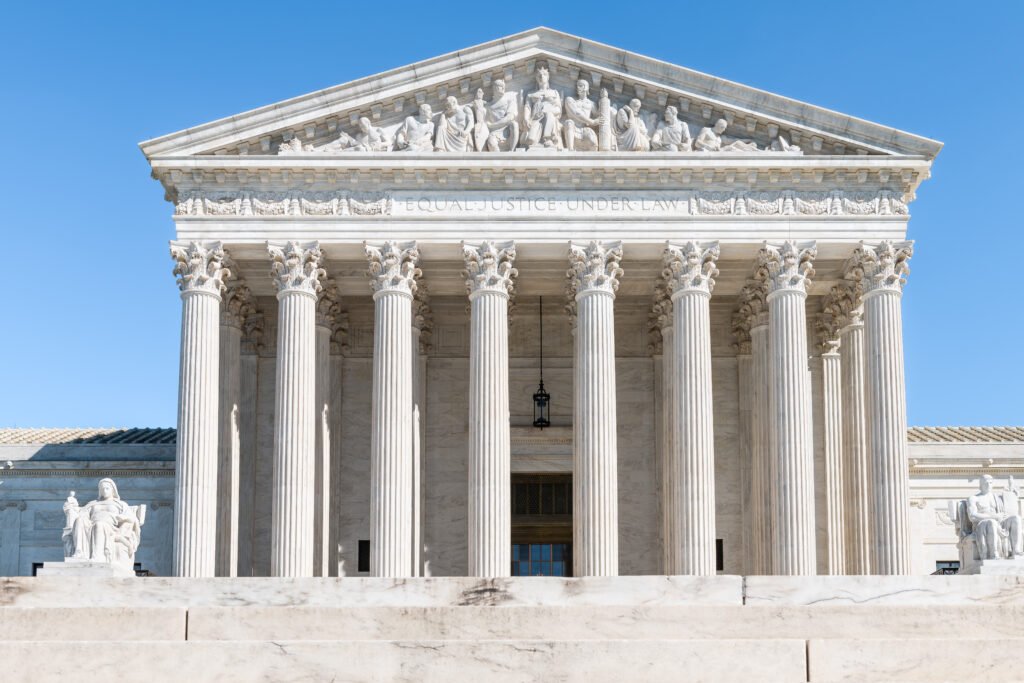
The prediction market on whether the Supreme Court will grant certiorari in a case concerning sports event contracts remains at 13.5% probability, unchanged over the past 24 hours despite robust trading volume of $929,259. This low odds assessment reflects the inherent difficulty in securing Supreme Court review, where fewer than 2% of petitions are granted annually. The market is pricing in a roughly one-in-seven chance that a qualifying case—one addressing derivatives classification, CFTC preemption of state gambling laws, or federal licensing authority over sports contracts—will reach the nation's highest court within the next 18 months.
Why It Matters
The legal questions encompassed in this market cut to the heart of how federal and state governments will regulate the expanding sports betting and derivatives markets in America. A Supreme Court decision on any of the three specified issues could fundamentally reshape the landscape for regulated prediction markets, sports gambling enforcement, and derivatives trading. Currently, the regulatory framework remains fragmented, with the Commodity Futures Trading Commission, state gaming regulators, and state attorneys general operating under competing interpretations of federal and state authority. A Supreme Court clarification could either consolidate federal control over these markets or explicitly preserve state-level discretion, making the question consequential for billions in market value and numerous jurisdictional disputes.
Key Factors
Several dynamics are suppressing the probability below conventional expectations. First, relevant litigation remains in early stages. While various lawsuits touch on sports contract regulation—including cases involving the CFTC's authority and state gaming commissions—few have progressed to the appellate level where circuit splits typically arise. Supreme Court review usually requires a split in federal appeals court decisions, which has not yet materialized in this domain. Second, the current Court's docket prioritizes cases involving constitutional questions, statutory interpretation of settled law, and conflicts between circuits. Sports derivatives regulation, though commercially important, lacks the constitutional urgency that typically attracts certiorari. Third, recent legislative developments—including debates over sports betting expansion and derivatives regulation—may be resolved administratively or through Congress rather than courts, reducing the need for judicial intervention.
Outlook
For the probability to materially rise above 13.5%, one or more of three developments would be necessary: (1) a federal appellate court decision on one of the three specified legal questions, creating pressure for Supreme Court review to resolve the conflict; (2) a major circuit split on CFTC versus state authority over sports contracts, signaling genuine legal uncertainty requiring clarification; or (3) legislative gridlock combined with an urgent regulatory crisis forcing courts to interpret statutory gaps. Through mid-2026, market participants appear skeptical such conditions will emerge. The stable 13.5% pricing suggests traders view certification as a low-probability event, though not negligible, and reflects confidence in the conventional wisdom that Supreme Court intervention in nascent regulatory areas occurs selectively and with delay.