Market Overview
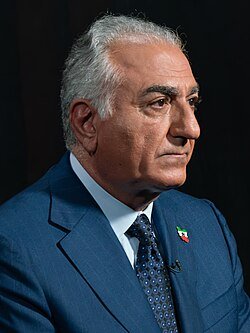
Prediction markets are assigning roughly 1-in-10 odds that Reza Pahlavi, the son of Iran's last shah and a prominent voice in the Iranian diaspora, will hold effective governing power over Iran within the next 14 months. The market has remained stable at 9.5% probability over the past 24 hours, with trading volume exceeding $1.14 million, indicating substantive participant engagement on a geopolitically significant question. The relatively low but non-negligible odds reflect acknowledgment of Iran's ongoing political turbulence while pricing in the formidable obstacles to a regime transition of this magnitude.
Why It Matters
The question of succession or regime change in Iran carries immense implications for regional stability, nuclear diplomacy, and U.S. foreign policy. Reza Pahlavi has positioned himself as a potential rallying figure for opponents of the Islamic Republic, particularly among diaspora communities and secular Iranians. However, the resolution criteria explicitly require de facto governing control—not symbolic recognition, foreign backing, or exile leadership without domestic authority. This high bar reflects the practical reality that simply overthrowing the current system would require overwhelming internal forces or an extraordinary convergence of military, institutional, and popular pressure.
Key Factors
Several structural realities constrain the probability. The Islamic Republic maintains substantial control over the Revolutionary Guard Corps, security apparatus, and state institutions, despite periodic protests and economic grievances. For Pahlavi to gain effective control by December 2026, Iran would need to experience a major political rupture—whether through military coup, civil unrest escalating to systemic collapse, or foreign intervention—none of which markets currently price as highly probable within 14 months. Additionally, Pahlavi himself remains in exile without a domestic power base comparable to established military or clerical factions within Iran. The market's 9.5% level suggests participants view such scenarios as possible but unlikely, consistent with historical precedent for authoritarian regimes' resilience even under acute stress.
Outlook
Material shifts in this probability would likely require concrete evidence of imminent political breakdown in Iran, such as military factions openly challenging the existing command structure, large-scale institutional defections, or extraordinary acceleration of civil unrest beyond recent years' patterns. Absent such developments, the market appears likely to remain in the single-digit range, reflecting a consensus that while Iranian politics remain volatile, a transition resulting in Pahlavi's effective control within 14 months remains a low-probability tail scenario. Traders should monitor indicators of regime stability, factional conflict within Iran's security establishment, and any signals of international intervention as the timeframe progresses.