MARKET OVERVIEW
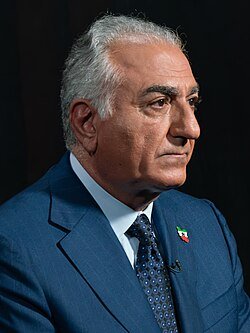
Prediction markets are currently pricing the probability that Reza Pahlavi—the exiled son of Iran's last shah—will hold and exercise governing authority over Iran by December 31, 2026, at 9.5%. This represents a low but meaningful probability, suggesting traders assign roughly 1-in-10 odds to a scenario requiring either dramatic political upheaval, military intervention, or negotiated regime transition within the next two years. With over $1.14 million in volume, the market reflects genuine uncertainty rather than negligible interest in the outcome.
WHY IT MATTERS
The resolution criteria are explicitly designed to measure de facto governing control—actual exercise of state power over armed forces, institutions, and executive decision-making—rather than symbolic recognition or foreign endorsement. This distinction is crucial: it rules out scenarios where Pahlavi gains international backing or nominal leadership without controlling Iran's domestic apparatus. The market essentially asks whether structural conditions could emerge that would allow a royalist opposition figure, currently living in exile with no formal institutional base inside Iran, to seize or inherit effective state control. Such an outcome would represent one of the most consequential geopolitical events in recent history.
KEY FACTORS DRIVING PROBABILITY
Several structural factors constrain the probability. The Islamic Republic maintains formidable institutional entrenchment: the Supreme Leader commands the Revolutionary Guards, intelligence services, and religious apparatus; the system has survived multiple internal crises and external pressures over four decades; and succession mechanisms, while contested, remain within the regime's existing power structures. For Pahlavi to meet the resolution criteria, Iran would need to experience either a near-total collapse of state authority allowing him to consolidate power, a negotiated transition that placed him in effective control, military intervention enabling his rule, or a palace coup by existing elites choosing him as figurehead—all scenarios with limited precedent.
Conversely, factors that could elevate the probability include: escalating internal instability and youth disaffection with the regime; economic deterioration narrowing the regime's coalition; international pressure or conflict creating state collapse conditions; or calculations by elements within the security apparatus that regime change offers better prospects than continuation. The 9.5% pricing suggests traders view these scenarios as possible but unlikely to crystallize within 24 months.
OUTLOOK
The stable probability—unchanged over the past 24 hours despite ongoing regional tensions—suggests the market has settled on a consensus view reflecting deep structural skepticism about near-term regime change combined with acknowledgment that geopolitical surprises remain possible. Developments that could shift the probability include major escalations in regional conflict, dramatic acceleration of internal opposition movements, unexpected elite defections, or indications of negotiation channels toward political transition. Absent such shocks, markets appear to be pricing this as a low-probability tail scenario reflecting the difficulty of overthrowing an entrenched authoritarian state, even one facing significant legitimacy challenges.