Market Overview
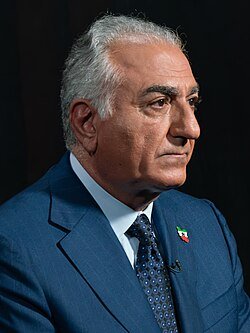
Prediction markets are pricing a 9.5% probability that Reza Pahlavi, the son of Iran's last shah and a prominent opposition figure, will hold and exercise effective governing authority over Iran by December 31, 2026. This represents a low but non-negligible tail scenario, with over $1.1 million in trading volume indicating sustained market interest. The probability has remained stable at this level over the past 24 hours, suggesting traders have reached relative consensus on the baseline odds absent breaking developments.
Why It Matters
Reza Pahlavi's potential assumption of power would represent one of the most consequential geopolitical outcomes in the Middle East and carry profound implications for U.S.-Iran relations, regional security architecture, and the nature of Iranian governance itself. The Islamic Republic has maintained control since 1979, and any transfer of power to an opposition figure would signal a complete collapse of the current regime. The market's assessment of this scenario—while low—acknowledges that regime change, though unlikely, remains within the realm of plausible outcomes given Iran's economic pressures, internal discontent, and succession uncertainties. For analysts tracking Iran, the market price encodes expectations about both the stability of current power structures and the viability of alternative leadership.
Key Factors
The 9.5% probability reflects several constraining realities. The Islamic Revolutionary Guard Corps and security apparatus remain tightly aligned with the current political system, and no comparable organized opposition force currently possesses the military or institutional capacity to seize state power within two years. Reza Pahlavi operates primarily from exile without a visible mass movement inside Iran coordinated around his leadership. The market's resolution criteria explicitly require de facto governing control—formal appointment or foreign recognition alone would not suffice—setting a high bar that excludes scenarios involving transitional leadership or external backing without domestic authority. Additionally, the timeframe is compressed; regime change typically unfolds over extended periods involving institutional decay, generational shifts, or severe external shocks. Economic hardship and social discontent in Iran are genuine factors that could accelerate such dynamics, but markets appear to weigh these against the regime's demonstrated capacity for repression and survival through previous crises.