Market Overview
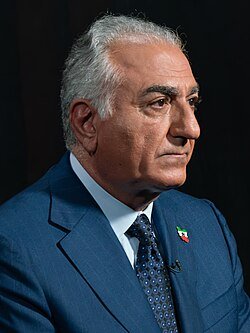
Prediction market traders are pricing the probability of Reza Pahlavi leading Iran in 2026 at 9.5%, with the odds remaining stable over the past day despite over $1.1 million in trading volume. The assessment reflects the substantial hurdles facing any scenario in which the London-based royalist would consolidate effective governing authority over the Islamic Republic within roughly 18 months. The market's baseline expectation is continuation of the current Iranian political structure under Supreme Leader Ayatollah Khamenei's institutional control.
Why It Matters
Reza Pahlavi, son of the former Shah Mohammad Reza Pahlavi who fled Iran during the 1979 revolution, has positioned himself as a potential figurehead for Iran's opposition and a symbol of pre-revolutionary governance. Any transition to his rule would require a fundamental collapse or transformation of Iran's theocratic system—one of the world's most institutionally entrenched regimes. The resolution criteria specify that Pahlavi must exercise actual de facto control over the armed forces, state institutions, and executive functions, not merely claim a symbolic or exiled leadership role. This high evidentiary bar underscores why the market probability remains low despite periodic Iran-focused geopolitical tensions.
Key Factors
The 9.5% probability reflects several structural constraints. Iran's Revolutionary Guard Corps, intelligence services, and clerical establishment have shown remarkable resilience through decades of sanctions, internal dissent, and regional conflicts. Any leadership transition would likely require either a dramatic military defeat, a complete institutional collapse, or an internal coup—scenarios the market judges as unlikely within the timeframe. Pahlavi himself remains a largely symbolic figure without a meaningful organizational base inside Iran; his decades in exile have limited his capacity to build domestic political networks or command institutional loyalty. Additionally, the resolution criteria explicitly exclude merely symbolic recognition or foreign endorsement absent real governing control, setting a stringent test that rules out scenarios where Pahlavi might be internationally recognized but unable to exercise authority domestically.
Outlook
Movement in this market would likely require significant developments: a major military conflict resulting in regime incapacity, a cascading succession crisis within Iran's clerical hierarchy, or evidence of organized internal movements with material capacity to seize state institutions. Absent such upheaval, the market suggests traders see the status quo as the baseline expectation. Any shift toward higher probabilities would require not merely political instability but demonstrated evidence of Pahlavi consolidating control over Iran's security apparatus and administrative machinery—a threshold that remains substantially distant from current observable conditions.