Market Overview
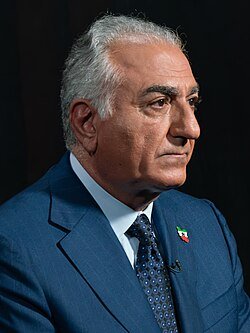
Prediction markets currently price the probability of Reza Pahlavi leading Iran by December 31, 2026, at 9.5%, with stable odds and substantial trading volume of $1.14 million indicating sustained participant interest in this geopolitical outcome. The market's resolution criteria are deliberately rigorous, requiring de facto exercise of governing authority—including control over armed forces, executive institutions, and state infrastructure—rather than symbolic status or international recognition. This distinction matters because it excludes scenarios where Pahlavi might gain nominal or transitional authority without effective domestic control.
Why It Matters
Reza Pahlavi II, the exiled son of Iran's last shah, has emerged as a focal point for opposition movements against the Islamic Republic, particularly following the 2022-2023 protests sparked by Mahsa Amini's death in police custody. For Western governments and regional analysts, the possibility of a regime transition that brings him to power would represent a fundamental realignment in Middle Eastern geopolitics. For prediction market participants, the low single-digit probability reflects the current assessment that such a transformation—whether through popular uprising, military coup, or negotiated settlement—remains highly unlikely within the 24-month window.
Key Factors
Several structural obstacles constrain the probability. The Iranian Revolutionary Guards Corps and security apparatus remain cohesive and loyal to the Supreme Leader system, making unilateral military takeover or collapse improbable absent a major international intervention that markets assess as unlikely. The Islamic Republic's institutional resilience has weathered decades of sanctions, internal dissent, and regional pressure, suggesting it would require extraordinary circumstances—sustained civil conflict approaching civil war, economic collapse triggering institutional failure, or major external military action—to create a power vacuum Pahlavi could fill. Additionally, Pahlavi's role as a foreign-based monarchist candidate limits his ability to cultivate deep domestic networks or credibly position himself as the natural successor to a collapsing regime. The market's implicit assessment is that while discontent with the current government is real, no credible pathway to Pahlavi's effective leadership exists in the near term.
Outlook
A shift upward in this probability would likely require either major developments in Iran's internal stability—such as visible fracturing of the security apparatus, economic collapse triggering institutional paralysis, or escalating civil unrest approaching organized rebellion—or significant external pressure creating conditions for regime negotiation or replacement. Conversely, any consolidation of leadership succession within the current system or further entrenchment of anti-monarchist sentiment would reinforce the low baseline. The stable 24-hour price action suggests consensus has formed around the current assessment, with traders viewing the probability as appropriately calibrated to genuine but limited realistic pathways. Monitoring developments in Iranian factional politics, security force cohesion, and regional security dynamics will remain essential to tracking whether this probability should shift materially.