Market Overview
Prediction market participants are pricing Ukraine's chances of recapturing any territory in Crimea by December 31, 2026 at just 7.5%, suggesting deep structural skepticism about the feasibility of such gains over the next two years. With over $2.5 million in volume, the market has maintained this probability consistently, indicating relative stability in market sentiment rather than recent volatility. The resolution criteria focus on ISW map verification—requiring sustained blue shading indicating Ukrainian territorial control—with negotiated settlements also qualifying if actual control is established.
Why It Matters
Crimea represents one of the most strategically significant territories in dispute, having been annexed by Russia in 2014. For Ukraine, recapturing any portion would carry immense symbolic and strategic value, signaling a reversal of Russian territorial gains and potentially reshaping post-war settlement negotiations. The market's low probability reflects the current military realities: Crimea remains firmly under Russian control with heavily fortified defensive positions, and Ukrainian forces currently face resource constraints and challenging operational conditions in eastern front lines. The 2.5-year timeframe theoretically allows for significant strategic shifts, yet the pricing suggests markets see no likely pathway to Crimean gains even over that extended period.
Key Factors
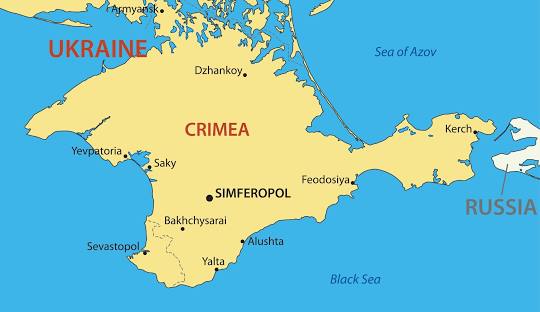
Several dynamics underpin the market's low odds. Militarily, Crimea's geographic isolation—connected to mainland Russia only via the Kerch Strait and a heavily defended bridge—makes conventional territorial capture extremely difficult without sustained naval superiority Ukraine currently lacks. Ukrainian offensive capabilities remain concentrated on holding ground and degrading Russian forces in Donbas and Luhansk rather than on ambitious amphibious or cross-strait operations. Additionally, the market's probability may reflect expectations around negotiated settlements: if war-ending talks occur, they are more likely to involve territorial compromises than Ukrainian reconquest of Crimea, which Russia considers core territory. The 7.5% floor likely represents residual tail-risk scenarios—major Russian military collapse, significant NATO escalation, or unexpected technological breakthroughs in Ukrainian capabilities.
Outlook
Meaningful shifts in this market would likely require fundamental changes in the military balance or geopolitical context. Sustained Ukrainian advances that push Russian forces out of Donbas, combined with NATO provision of long-range precision weapons or amphibious capabilities, could gradually shift probabilities upward. Conversely, further Russian consolidation or Ukrainian military exhaustion might push odds even lower. The market's stability at 7.5% suggests traders view this outcome as a persistent long-shot—possible but requiring conditions unlikely to materialize within the two-year window. Developments in peace negotiations will be crucial; if talks begin framing Crimea as negotiable territory rather than a Russian redline, market probability could see meaningful movement.