Market Overview
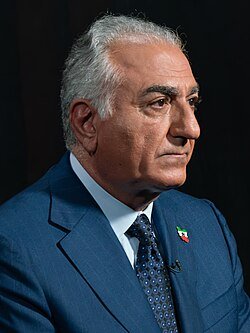
Prediction markets are pricing a 9.5% chance that Reza Pahlavi, son of the last shah, will exercise effective governing authority over Iran by December 31, 2026. The market has remained stable at this level over recent trading, with over $1.1 million in volume, indicating consistent participant assessment despite the volatile nature of Iranian politics. The resolution criteria require de facto control—including command of armed forces, executive ministries, and state infrastructure—rather than symbolic status or foreign recognition, setting a high bar for a \"Yes\" outcome.
Why It Matters
Reza Pahlavi has positioned himself as a focal point for Iranian opposition to the Islamic Republic, particularly since intensified protests following the 2022 death of Mahsa Amini. His potential ascendancy would represent one of the most dramatic geopolitical realignments in decades, reversing the 1979 revolution and reshaping Iran's regional role and international relationships. The relatively low odds suggest markets view such a scenario as possible but unlikely within the compressed 24-month timeframe, requiring extraordinary developments including potential state collapse, military defection, or negotiated transition.
Key Factors
Several structural obstacles constrain the probability. Iran's security apparatus—particularly the Islamic Revolutionary Guard Corps—maintains institutional interests tied to the current system and has historically moved decisively against existential threats to regime legitimacy. Reza Pahlavi's legitimacy rests primarily on diaspora support and younger Iranians frustrated with current governance; translating discontent into organizational capacity sufficient to unseat an entrenched security state remains undemonstrated. The market's assessment also reflects the absence of credible pathways: unlike scenarios involving internal succession or negotiated transitions, Pahlavi's return would require either external military intervention, mass defection within security services, or state-level institutional collapse. Current indicators show none of these conditions materializing, though periodic unrest and economic strain persist.
Outlook
The stability of odds at 9.5% suggests traders view the probability as reflecting genuine tail-risk—plausible in scenarios involving major regional conflict, severe economic collapse, or unexpected security force fractures, but not baseline expectations. Developments that could shift probabilities upward include significant military defections, coordinated opposition mobilization with international backing, or demonstrated fractures within IRGC command structures. Conversely, consolidation of internal regime authority or succession by younger hardliners could push odds lower. The market's current pricing reflects a wait-and-see posture, with most probability mass assigned to continuity of some form of Islamic Republic governance through 2026.