Market Overview
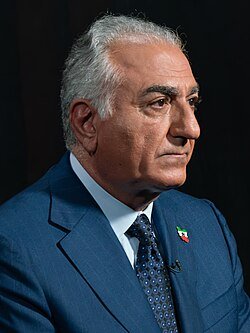
The Reza Pahlavi Iran leadership market is currently valued at 9.5% probability, unchanged from 24 hours prior, with substantial liquidity at $1.14 million in trading volume. The modest probability reflects the extreme difficulty of displacing Iran's entrenched Islamic Republic system within a 24-month window. For resolution as \"Yes,\" Pahlavi would need to exercise effective de facto governing control—including command of armed forces, state institutions, and executive decision-making—by December 31, 2026. The market explicitly excludes scenarios involving merely symbolic status, foreign recognition without domestic control, exile leadership, or transitional arrangements without substantive authority.
Why It Matters
This market captures trader sentiment on one of the Middle East's most consequential possible developments: a fundamental shift in Iran's power structure. Any transition of this magnitude would reshape regional geopolitics, affect global energy markets, and influence U.S. foreign policy. Pahlavi, the son of Iran's last shah, represents the royalist opposition and has been a focal point for anti-regime sentiment among diaspora communities and some internal opposition groups. The relatively low probability—9.5%—reflects the structural entrenchment of Iran's Islamic Republic, including its dual power system, revolutionary guard dominance, and security apparatus.
Key Factors Driving the Probability
Several dynamics underpin the current valuation. First, Iran's Islamic Republic possesses significant institutional resilience and security apparatus depth that has endured four decades of internal and external pressure. Second, the timeframe is compressed: achieving de facto state power within 24 months would require either a rapid internal collapse, a successful large-scale uprising with organizational capacity to seize control, or foreign military intervention—none of which traders assess as probable in the near term. Third, while Iran faces real economic hardship, widespread grievances, and periodic unrest (notably the 2022-2023 protests), these have not translated into organized movements capable of threatening regime survival, much less installing a specific alternative leader. Fourth, Pahlavi's own position as a exile-based monarchist opposition figure limits his base within Iran and creates questions about whether he could command the armed forces and security services even in a post-regime scenario.
Outlook
Unless significant new developments emerge—such as major fractures within Iran's military leadership, dramatically escalated internal instability, or external military intervention—the market is likely to remain in the low single-digit to low double-digit range. The 9.5% valuation appears to price in small-probability tail scenarios (major regional conflict, economic collapse, unprecedented internal schism) while treating a standard regime-change outcome as highly unlikely within the specified timeframe. Traders monitoring this market will likely focus on indicators of institutional stability in Tehran, fractures within Iran's security apparatus, and the trajectory of anti-regime mobilization, as any of these could shift valuations meaningfully.