Market Overview
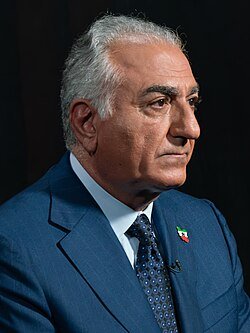
Prediction market traders are pricing a 9.5% probability that Reza Pahlavi will hold and exercise the powers of Iran's head of state by December 31, 2026. The market, which has generated over $1.1 million in volume, remains stable with no significant price movement in the past 24 hours, suggesting a consensus view among participants about the low but non-negligible odds of such a dramatic political transition. The resolution criteria explicitly require de facto governing control—including command over armed forces, state institutions, and executive decision-making—rather than symbolic status or foreign recognition, setting a high bar for affirmative resolution.
Why It Matters
A change of power in Iran would rank among the most consequential geopolitical shifts of the decade, with implications for regional stability, global energy markets, nuclear diplomacy, and U.S. Middle East policy. Reza Pahlavi, son of the last Shah Mohammad Reza Pahlavi who was overthrown in 1979, has emerged in recent years as a rallying figure for Iranian opposition movements, particularly following the 2022 protests over Mahsa Amini's death. The resolution criteria in this market distinguish between symbolic opposition leadership and actual control of the Iranian state apparatus, making the 9.5% figure a measure of traders' assessment of genuine regime collapse or transition risk, not merely the visibility or influence of opposition figures.
Key Factors
Several structural factors constrain the probability. The Islamic Republic's security apparatus—including the Islamic Revolutionary Guard Corps, Basij militia, and intelligence services—maintains tight control over coercive capacity and internal surveillance. The regime has demonstrated resilience through decades of sanctions, regional conflicts, and periodic unrest, with institutional mechanisms designed specifically to prevent rapid power transfers. Any transition would likely require either a coordinated military coup (extraordinarily rare in contemporary Iran), a popular uprising of sufficient scale to overwhelm security forces while establishing alternative governance structures, or external military intervention—none of which appear imminent. Additionally, the 12-month timeframe is compressed; historical regime changes typically require years of institutional decay or sustained internal conflict to materialize.
The 9.5% probability likely reflects traders' acknowledgment that while regime change remains improbable, it is not impossible. Factors that could shift odds upward include severe economic deterioration triggering broader institutional fractures, significant generational shifts within security forces, or cascading international crises that overwhelm regime capacity. Conversely, successful security crackdowns on opposition movements or consolidation of hardline political control would likely push probabilities lower. The market's current stability suggests traders view recent developments—including ongoing protest movements and economic hardship—as significant but insufficient to materially alter baseline regime-change risk assessments.
Outlook
With roughly one year remaining until resolution, the market will likely track major developments in Iran's internal politics, economic conditions, and security dynamics. Key indicators would include the trajectory of youth opposition organizing, factional tensions within the Islamic Republic's leadership, responses to international sanctions, and any signs of institutional fracture within security services. The high barrier for resolution—requiring actual de facto control rather than external backing or ceremonial appointment—means the 9.5% figure captures a genuine but circumscribed view of transformation risk, consistent with most geopolitical assessments of Iran's near-term stability.