Market Overview
Prediction market traders are assessing a 7.5% probability that at least one earthquake of magnitude 9.0 or higher will occur anywhere on Earth between December 8, 2025, and December 31, 2026. The market has attracted $181,166 in trading volume with odds remaining stable over the past 24 hours. Resolution will be determined by the United States Geological Survey's official earthquake database, with a grace period extending through January 31, 2027, to account for magnitude revisions on major events.
Why It Matters
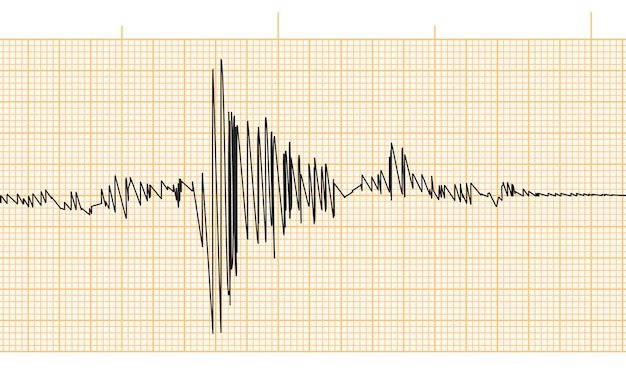
Magnitude 9.0+ earthquakes represent the most extreme seismic events on the planetary scale, capable of triggering devastating tsunamis and causing widespread destruction across multiple countries. The 2004 Indian Ocean earthquake and the 2011 Tōhoku earthquake in Japan both exceeded magnitude 9.0, killing hundreds of thousands. Understanding the likelihood of such events—even in probabilistic terms—is relevant for disaster preparedness planning, insurance pricing, and scientific communication about seismic hazard. The market odds effectively quantify how traders weigh seismic risk over a defined 13-month window.
Key Factors
Historical earthquake records show that magnitude 9.0+ events occur infrequently. Over the past century, only a handful of such megaquakes have been recorded globally, suggesting annual probability in the low single digits. The distribution is not uniform; subduction zones—particularly those bordering the Pacific Ocean—account for nearly all recorded magnitude 9.0+ earthquakes. Current seismic monitoring systems are sophisticated enough to detect such events with near certainty, limiting uncertainty about occurrence rather than detection. Traders pricing the market at 7.5% are implicitly assessing that the next year presents roughly average seismic risk, with no particular indicators of elevated megaquake probability in the near term.
Outlook
Movement in this market would likely require either new scientific evidence suggesting elevated subduction zone stress or a significant precursory seismic sequence in a major fault system. Conversely, if the 13-month window closes without a magnitude 9.0+ event, the market would resolve to \"No,\" reinforcing the baseline expectation that such extreme earthquakes remain rare occurrences measured in decades rather than years. The stable pricing suggests traders view the current assessment as appropriately calibrated to both historical frequency and contemporary seismic conditions.