Market Overview
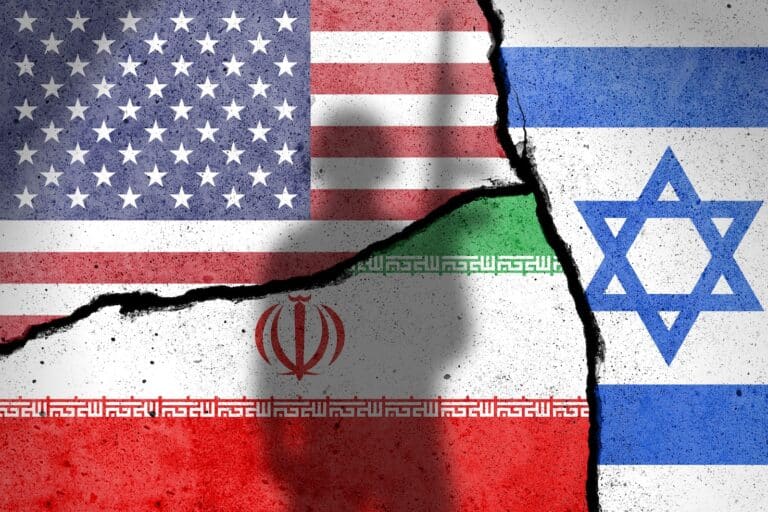
With $28.7 million in trading volume, a prediction market on whether military action against Iran will end by April 17, 2026 is trading at a perfect 100% probability—indicating traders believe there is effectively zero chance of a US or Israeli drone, missile, or air strike on Iranian territory or official Iranian diplomatic facilities through that date. The market has held at this ceiling for at least 24 hours, suggesting strong consensus rather than a reaction to breaking news. The resolution criteria are narrowly defined to exclude intercepted strikes, ground operations, and cyber actions, focusing specifically on aerial weapons that successfully impact Iranian soil or official Iranian embassies and consulates.
Why It Matters
The current pricing is striking given the history of US-Israel military tensions with Iran. The region has experienced multiple cycles of escalation and de-escalation, including the January 2020 US killing of General Qasem Soleimani, subsequent Iranian ballistic missile strikes on US bases in Iraq, and more recent exchanges of drone and missile fire in 2024. A prediction market pricing military action as impossible through April 2026—nearly 16 months away—reflects either extraordinary confidence in sustained diplomatic channels, a belief that current deterrence frameworks are holding firm, or market participants perceiving the question as sufficiently remote that they are comfortable with extreme odds. The high volume suggests this is not a niche market but one attracting significant institutional or sophisticated retail interest.
Key Factors
Several dynamics underpin the market's current assessment. First, as of late 2024 and early 2025, both the US and Israel appear to have paused direct military escalation against Iran itself, despite ongoing proxy conflicts and tensions. Second, the definition of a \"qualifying strike\" is precise—only aerial weapons that successfully impact Iranian soil count, which excludes the frequent exchanges of intercepted missiles and drones that have characterized recent years. This narrower frame may make the outcome more likely to resolve \"Yes\" than public perception of regional danger would suggest. Third, the market may be discounting the possibility of unexpected geopolitical shocks: leadership changes, terrorist attacks, or rapid escalations in the Israel-Gaza or Israel-Hezbollah conflicts that could cascade into direct Iran action. Fourth, the three-day reporting consensus rule creates a small buffer; if a strike occurs but credible reporting cannot confirm it within 72 hours, the market resolves \"Yes\" anyway, further tilting odds toward affirmation.
Outlook
The 100% probability is likely unsustainable over 16 months, and any meaningful shift in Middle East dynamics—whether deterioration in Israeli-Iranian proxy wars, a major terrorist incident, or domestic political changes in Washington or Jerusalem—could dislodge traders from this extreme position. However, the market's current pricing also suggests that traders view the specific scenario (a successful US or Israeli aerial strike on Iran or Iranian official facilities) as sufficiently unlikely under plausible baseline conditions that even long-dated risk is minimal. Investors monitoring this market should watch for movements in related markets on broader Iran tensions, Israel security developments, or US foreign policy shifts, as these could presage adjustments in military action odds. For now, the market is essentially pricing a bet that the status quo of tense coexistence and proxy competition, rather than direct military confrontation, will persist through mid-April 2026.