Market Overview
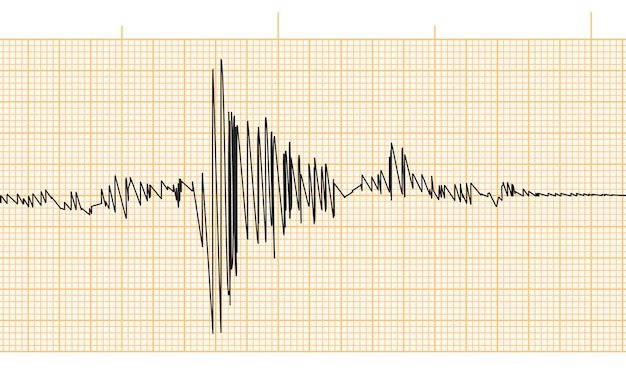
Prediction market participants are assigning a 7.5% probability to at least one earthquake reaching or exceeding magnitude 9.0 occurring anywhere on Earth during 2026. The market has generated $181,166 in trading volume and has remained stable over the past 24 hours with no significant price movement, indicating that consensus around this low-probability event remains consistent among traders. The USGS Earthquake Hazards Program serves as the authoritative resolution source, with a 24-hour grace period built in to account for any magnitude revisions that often follow initial earthquake recordings.
Why It Matters
Magnitude 9.0+ earthquakes represent the most destructive natural disasters on record, capable of triggering devastating tsunamis and causing hundreds of thousands of deaths. The 2004 Indian Ocean earthquake and tsunami killed approximately 230,000 people across multiple countries, while Japan's 2011 Tohoku earthquake and subsequent tsunami resulted in over 15,000 deaths. For disaster preparedness communities, climate scientists, and insurance markets, understanding the probability of such events—even at rare intervals—carries significant implications for long-term risk planning and resource allocation.
Key Factors
Scientific data strongly constrains this market's pricing. Magnitude 9.0+ earthquakes occur roughly once per decade globally, making the probability of one specific year experiencing such an event substantially lower than the long-term average. Seismic activity follows no predictable pattern that would suggest elevated risk in 2026 specifically. The market's 7.5% figure appears to reflect both the historical baseline frequency and a modest premium for genuine uncertainty about earthquake timing. Traders appear to be pricing in only negligible impact from recent mid-magnitude seismic events or changing geological conditions; the stable price over 24 hours suggests no new catalysts have emerged to shift expectations.
Outlook
For this market to move meaningfully, either significant seismic activity would need to be detected in subduction zones known to host megaquakes—primarily around the Pacific Ring of Fire—or new scientific evidence suggesting anomalous crustal stress accumulation in 2025-2026. Conversely, the market could drift lower if traders become more confident in the statistical rarity of back-to-back megaquake years. Given the inherent unpredictability of earthquake timing and the market's relatively thin pricing cushion above zero, this remains a pure tail-risk bet where the underlying science suggests extreme events remain improbable but not impossible.