Market Overview
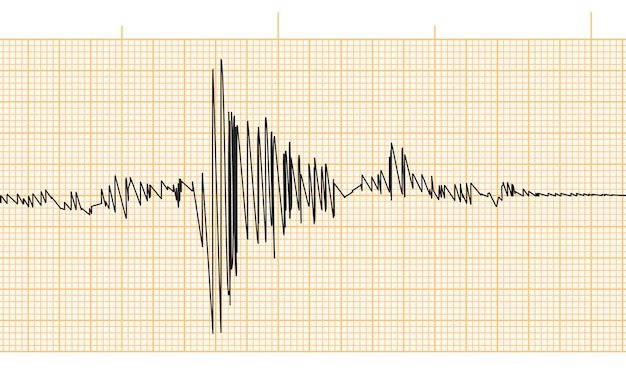
A prediction market on whether a magnitude 10.0 or above earthquake will strike anywhere on Earth during 2026 is currently pricing the event at 5% probability. The question runs through the end of 2026, with resolution based on United States Geological Survey data. The market has maintained this valuation with $589,842 in volume, suggesting modest but consistent trader interest in an outcome most participants view as highly unlikely.
Why It Matters
The possibility of a magnitude 10.0 earthquake carries profound implications for earthquake science and disaster preparedness. Such an event would represent a seismic shift in understanding of planetary geology—literally. A magnitude 10 earthquake would release roughly 32 times more energy than the 2004 Indian Ocean earthquake (magnitude 9.1-9.3) that triggered a catastrophic tsunami. For context, no magnitude 10 earthquake has ever been reliably recorded in human history. The largest confirmed earthquake on instrumental record is the 1960 Great Chilean earthquake, measured at magnitude 9.5. Understanding whether such an event is plausible within a specific year informs both scientific research priorities and public risk perception.
Key Factors
The 5% probability reflects several competing considerations. On one hand, geological constraints suggest magnitude 10 earthquakes are theoretically possible but would require unprecedented rupture lengths and fault movements. Most seismologists believe Earth's largest faults cannot sustain the stress accumulation and rupture dynamics necessary for such magnitude. The subduction zones capable of producing the largest earthquakes—such as those in the Pacific Ring of Fire—have documented rupture lengths that, when combined with average slip distances, suggest a physical upper bound around magnitude 9.5 to 9.7. Additionally, no credible seismic monitoring suggests imminent stress accumulation that would precede such an event anywhere globally. On the other hand, scientific knowledge of extreme earthquakes remains incomplete, and rare events by definition occur unexpectedly. The market's 5% figure may be pricing in residual uncertainty—the possibility that current geological models underestimate maximum magnitude or that an unforeseen mechanism could generate such an earthquake.
Outlook
The market's probability is likely to remain stable absent new seismic activity or scientific developments. Significant upward movement would require either credible geological evidence of dangerous stress accumulation at a major fault zone or a substantial revision in earthquake science theory. Conversely, any magnitude 9+ earthquake during 2026 that falls short of magnitude 10 would effectively confirm the current 5% pricing by resolving negative. Market participants should monitor USGS seismic bulletins and peer-reviewed research on maximum magnitude earthquake estimates, though these are unlikely to shift materially over a single year. The narrow 24-hour resolution window after a candidate earthquake appears on official records suggests traders are betting not primarily on seismic surprise, but on the structural improbability of earthquakes of this magnitude given current understanding of fault mechanics and planetary stress distribution.