Market Overview
The MH370 underwater wreckage discovery market is trading at 1.7% probability, indicating that traders assign minimal likelihood to finding new debris from the aircraft within the specified window of December 4, 2025 through June 30, 2026. The market has attracted $115,164 in trading volume, suggesting modest but steady interest in an event that has captivated public attention since the plane vanished in March 2014. The probability has remained stable over the past 24 hours, with no significant repricing despite the search window having recently opened.
Why It Matters
MH370 remains one of aviation's greatest mysteries, with 239 people aboard the Boeing 777 when it disappeared over the Indian Ocean. While several pieces of debris confirmed to be from the aircraft have washed ashore in East Africa and the western Indian Ocean since 2015, the main wreckage and flight data recorders—which could provide crucial answers about what happened—have never been located. A discovery of underwater wreckage would represent a major breakthrough in understanding the aircraft's final moments and fate, potentially resolving questions that have haunted families of passengers and aviation experts for more than a decade.
Key Factors
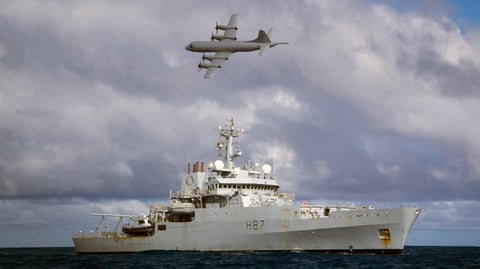
The extremely low probability reflects several interconnected challenges. The Indian Ocean search zone is vast and deep, with water depths exceeding 6,000 meters in some areas where the aircraft is believed to have descended. Previous coordinated search efforts involving multiple nations and sophisticated underwater technology have yielded limited results despite spending hundreds of millions of dollars. The Malaysian government's search efforts have been sporadic and underfunded relative to the scale of the task. Additionally, the market's definition requires discovery of \"new\" underwater wreckage—ruling out previously located debris or recovered material—which further narrows the conditions for resolution. Ocean currents and seafloor conditions also make locating and identifying wreckage exceptionally difficult. The compressed timeline of seven months may also discourage traders from pricing a higher probability, as sustained search operations require time to mobilize resources, obtain funding, and conduct surveys in remote waters.
Outlook
For the probability to materially shift upward, significant developments would be needed: announcement of a well-funded, coordinated international search effort specifically targeting underwater debris locations within the resolution window; credible intelligence or acoustic data suggesting a likely impact zone; or technological breakthroughs in deep-ocean search capabilities. Conversely, the market could see the probability decline further if search efforts are deprioritized or if political will behind investigations continues to diminish. Given the historical pattern of failed searches and the logistical barriers involved, the current 1.7% odds likely reflect the consensus view that finding new wreckage in this narrow timeframe would constitute a remarkable occurrence rather than an expected outcome.