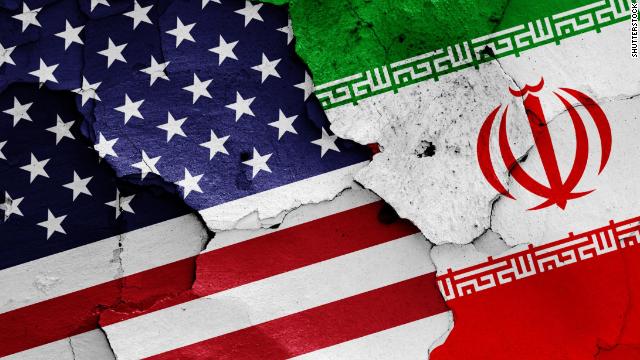
Market Overview
The prediction market for US military forces entering Iran has settled at a 99.3% probability against the event occurring by year-end, with $17.9 million in volume indicating substantial trader participation. The market has held stable at this level over the past day, suggesting a consensus view among participants that such an incursion falls well outside baseline expectations. The narrow 0.7% probability assigned to \"Yes\" reflects the high bar traders have set for direct military entry, even as the US maintains active military presence throughout the Middle East.
Why It Matters
The distinction between military entry and other forms of US intervention is significant. The market explicitly excludes diplomatic visits, military advisors, and contractor personnel—categories that could plausibly increase given ongoing Middle East operations. The focus on physical entry by active military personnel represents the most dramatic threshold for escalation. A crossing of Iran's terrestrial border would constitute a fundamental shift in US-Iran relations and carry substantial geopolitical consequences, making the market's pricing relevant to broader assessments of regional conflict risk.
Key Factors
Several structural factors support the current low probability. The US already maintains military capabilities across the region—in Iraq, the Persian Gulf, and via air assets—that allow for operations without ground incursion. The resolution criteria specifically exclude maritime and aerial operations, which represent the primary vectors for US military action historically. Additionally, the distinction between active military personnel and contractors or advisors means that limited, covert operations would not trigger resolution. Diplomatic and political costs of a ground incursion also remain substantial, constraining strategic incentives even amid tensions.
The remaining 0.7% probability appears to account for tail-risk scenarios: rapid escalation of conflict with Iran, unexpected security developments requiring emergency ground response, or pursuit operations that cross borders. While these scenarios are possible within the timeframe, they are priced as sufficiently unlikely that traders view direct military entry as highly improbable.
Outlook
Movement in this market would likely require either a significant escalation in US-Iran hostilities or a major regional security crisis creating urgent operational need. Absent such developments, the market may remain anchored near current levels through year-end. Traders should monitor developments in US military operations in Iraq and broader regional tensions as potential drivers, though the high barrier for physical entry and available alternatives to ground operations suggest the low probability has substantial staying power.