Market Overview
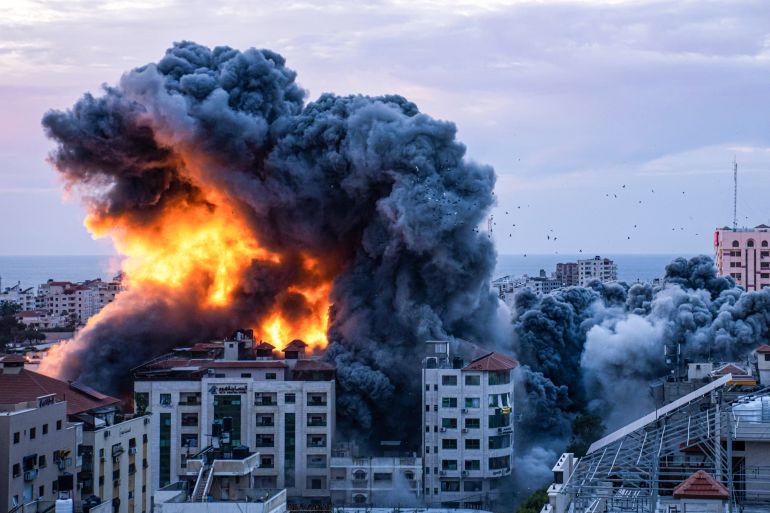
A Metaculus prediction market assessing the likelihood of a U.S. or Israeli kinetic military strike against Iran's Isfahan Nuclear Technology Center has reached 100% probability, indicating traders view such an attack as virtually certain before the March 31, 2026 deadline. The market has maintained this level for at least 24 hours with significant trading volume of $1.37 million, suggesting broad consensus among participants rather than speculative positioning. The market specifically excludes cyber operations, sanctions, and diplomatic actions—focusing only on direct military strikes including drone and missile strikes, aerial bombings, and ground operations by operatives. Notably, the resolution criteria explicitly state that intercepted, shot down, or missed strikes do not count toward a \"Yes\" resolution.
Why It Matters
The Isfahan Nuclear Technology Center represents a critical node in Iran's nuclear program infrastructure, making it a potential military target should either the U.S. or Israel determine that diplomatic or economic measures have failed to adequately constrain Iranian nuclear development. Market pricing at certainty reflects the underlying assumption that escalation is now inevitable rather than conditional. This signals trader belief that recent regional events—including missile exchanges between Israel and Iran earlier in 2024, tensions following the Gaza conflict, and ongoing concerns about Iranian nuclear advancement—have moved military intervention from possibility into the realm of expected outcomes. The market's clarity that only successful strikes count creates an important technical distinction: traders believe an attempt will occur, not merely that one might be attempted and fail.
Key Factors
Several interconnected dynamics appear to be driving the 100% reading. First, the approximately 15-month window to the deadline (from late 2024 through March 2026) provides ample time for political or military decisions to crystallize, and trader assessments may reflect judgments about the trajectory of U.S. and Israeli policy under current administrations. Second, Iran's continued uranium enrichment activities and advances in its nuclear program create persistent pressure for external intervention among parties viewing the program as an existential threat. Third, recent direct confrontations between Israel and Iran have demonstrated willingness on both sides to conduct cross-border military operations, establishing a pattern of escalation. The high trading volume suggests this view commands substantial conviction across the prediction market community rather than representing an outlier position.
Critical Context and Caveats
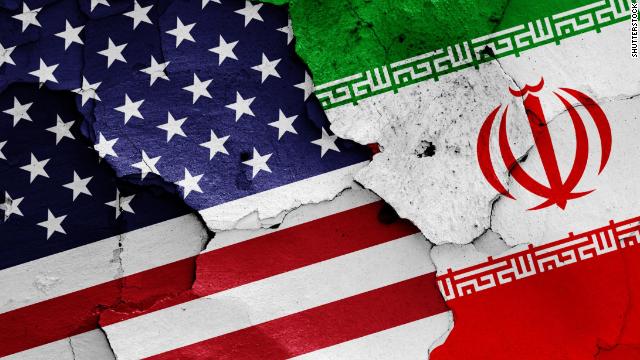
It is important to note that 100% probability in prediction markets typically reflects overwhelming conviction rather than absolute certainty—markets rarely if ever reach true certainty, and this reading may reflect either an extremely high conviction threshold being met or potential limitations in market microstructure (such as insufficient liquidity to push odds lower or technical factors preventing price discovery below this level). The market's specific exclusion of intercepted strikes is significant: Iran's air defense capabilities have improved, and as demonstrated in previous exchanges, Israel and the U.S. possess air superiority but cannot guarantee 100% strike success. A scenario in which an attack is attempted but ultimately intercepted would resolve this market to \"No\" despite representing genuine military escalation.
Outlook
The path for market probability to shift substantially downward would require either a significant de-escalation in U.S.-Iran or Israel-Iran relations, a breakthrough in nuclear negotiations, or explicit policy statements from Washington or Tel Aviv indicating acceptance of the current Iranian nuclear posture. Conversely, developments such as major breakthroughs in Iranian uranium enrichment, direct attacks on U.S. or Israeli assets, or changes in regional political leadership could reinforce the current high-probability reading. Market participants should note that this position reflects trader expectations as of now; actual policy decisions remain subject to the unpredictable dynamics of statecraft, intelligence assessments, and regional security calculations that may not be fully visible to market participants.