Market Overview
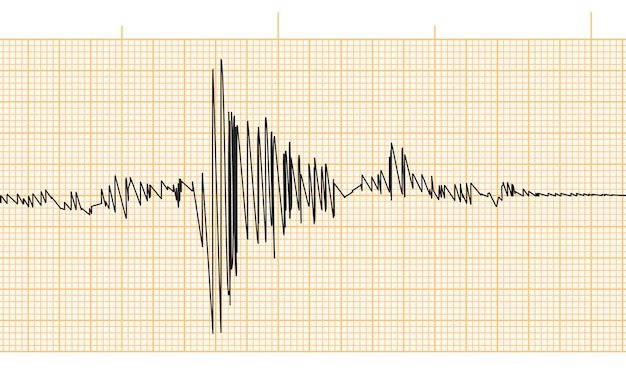
The prediction market for major earthquakes in 2026 is currently priced at 24% probability for the specific outcome of 11 to 13 magnitude 7.0+ events occurring worldwide during the calendar year. With $410,030 in trading volume, this represents a relatively niche but active prediction market. The probability has remained stable over the past 24 hours, suggesting a lack of recent significant seismic activity or new geological assessments that would substantially shift trader expectations.
Why It Matters
Historical earthquake frequency serves as the primary reference point for evaluating this market's pricing. Long-term seismic data from the United States Geological Survey shows that magnitude 7.0+ earthquakes occur at a global average rate of approximately 15 per year, though annual totals fluctuate considerably due to the stochastic nature of seismic events. The 11-13 range targeted in this market falls below the historical mean, suggesting traders are pricing in a below-average seismic year for 2026. Understanding baseline earthquake probabilities is relevant for insurers, infrastructure planners, and disaster risk management professionals who use such forecasts for preparedness and resource allocation.
Key Factors
Several considerations underpin the current 24% probability. First, seismic activity remains inherently unpredictable on annual timescales, with individual years varying widely from the long-term average. Recent years have seen totals ranging from below 10 to over 20 major earthquakes, reflecting natural variability rather than trend changes. Second, no credible scientific evidence suggests elevated or suppressed seismic risk for 2026 specifically, meaning traders lack concrete geological signals to justify a significantly higher or lower probability than historical baselines. Third, the narrow range of 11-13 events represents less than one-third of the historical average outcome space, which mathematically reduces the probability any single three-event window receives compared to broader ranges. The resolution mechanism—using USGS data with provisions for delays until early January 2027—is well-defined and reduces ambiguity around earthquake counting or verification.
Outlook
The market is unlikely to shift materially absent either major seismic events early in 2026 or significant new scientific forecasts for the year. Traders will monitor early-year earthquake activity closely, as clusters of major events or publication of new seismic hazard assessments could adjust expectations upward or downward. The 24% pricing essentially reflects a bet that 2026 will fall in the lower-to-middle range of historical variability, with roughly three-in-four odds traders assign to outcomes outside the 11-13 band—either fewer or more major earthquakes than this range captures.