Market Overview
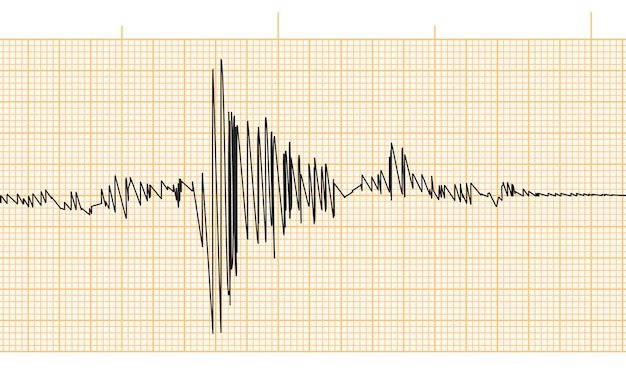
Prediction market participants are pricing a 5% chance that Earth will experience at least one earthquake measuring magnitude 10.0 or higher between December 8, 2025 and December 31, 2026. With $589,842 in trading volume, the market has maintained stable odds over the past 24 hours, suggesting equilibrium pricing among active traders. The market's resolution hinges on data from the U.S. Geological Survey's Earthquake Hazards Program, with provisions for magnitude revisions in the 24 hours following any qualifying event.
Why It Matters
Earthquakes of magnitude 10.0 represent a theoretical boundary in seismic science. The largest earthquake reliably recorded was the 1960 Great Chilean earthquake at magnitude 9.5, while the 2004 Indian Ocean earthquake and 2011 Tohoku earthquake both reached 9.1 and 9.0 respectively. A magnitude 10.0 event would represent a seismic event approximately 5.6 times more energetic than the strongest earthquake in modern instrumental history. The question addresses not merely probability but the outer limits of terrestrial seismic potential, making it relevant to discussions of extreme risk and planetary geology.
Key Factors
The 5% probability reflects several converging realities in seismology. First, magnitude 10.0 earthquakes appear to exceed the mechanical limits of Earth's lithosphere based on current geological understanding. The length of subduction zones—where the largest earthquakes occur—constrains maximum rupture dimensions, which in turn limits maximum magnitude. Most seismologists consider magnitude 10.0 physically implausible given current tectonic theory. Second, the market applies a one-year temporal constraint to an already-improbable event, further compressing odds. Third, the 5% figure likely represents a modest allocation to epistemic uncertainty and model error rather than genuine expectation, accounting for the possibility that Earth's seismic capacity exceeds current estimates or that unknown processes could occur.
Outlook
The probability is unlikely to shift significantly absent major developments in seismic science or emerging precursor activity. Should monitoring networks detect anomalous seismic or geodetic signals consistent with a potential great earthquake, probability could rise substantially. Conversely, the market may drift toward lower odds as the 2025-2026 window approaches without triggering events, following standard base-rate reasoning. The stable 24-hour pricing suggests traders view the probability as appropriately calibrated to current scientific understanding and see limited new information materializing in real time.